Showing posts with label history. Show all posts

Aspects of Lord Shiva


Unakoti means one less than one crore.

Bangladesh was somewhere, very near, downstream around the corner or along the pathway that red earthen crept into the jungle, parting the trees and disappearing in the curve of the hillside.  Direction wasn’t easy to judge in the geography of the hills but it was certainly so that Moulvibazar wasn’t far.

The air was thickly still and sweating.  From climbing the short trail up the hill on the other side of the waterfall it had become uncomfortable and hard to breathe.  It was one less than one crore.  It was May and only fools arrive there then.


At the hilltop was a rock to sit on that had no divine face to it.  It was a spot, on the rock, to contemplate and to rest. Time to time a traveller should take rest.


Below and by contrast, about the waterfall and along the stream was a crowd of rock-cut faces, chiselled, large and small, divine.  Lord Shiva was there, depicted several times and at the largest size available in India.  There were many of his colleagues, Durga on a lion and the image of Shiva’s son Ganesha carved, three times, into stone.  Shiva’s Nandi Bull, his carriage, indeed three examples of it too, waited and might wait forever half-submerged in river sand.  Other rocks had become turtles.


Then North Tripura, as if to bless the moment, found a slight but unmistakable hilltop breeze.  Or was it sympathy for the foolhardy May traveller?

The immediate world, the world in general and the inside world are the elements of Shiva’s trident.  The beauty of the hills was immediate; the daily tension and trivialities removed, as it is when on the road, was the world in general; and peace, not least because the rock-cut faces, both in duration and in space, brought home the twin truths of insignificance and smallness, was inside.


Lord Shiva must’ve understood that contemplation as he is known as a yogi, often depicted in his cross-legged, meditating aspect of spirituality.  And the tranquillity of the place, the music of water at its quietest in May, could’ve easily encouraged the going beyond contemplation into meditation.


But just how many images were there?  It would’ve taken some effort to count them; perhaps it was just as well to leave it to the name of the place.  Unakoti means the one less than one crore pairs of eyes looking out from about the waterfall.


Lord Shiva must’ve understood the taking breath there, on the hilltop rock, as it is said he also once took rest at the very spot.  Time to time a traveller should take rest.

Shiva’s travel plan then was to reach Varanasi as a member of a large party of gods and goddesses, totalling one crore in number.  One evening they sheltered on Unakoti hill, with Shiva expressly instructing that all should arise before dawn to set out once again. 


But when dawn arrived, Shiva found he was the only one awake and in anger he cursed his companions, turning them to stone so that they could remain for eternity, while he set forth towards his destination, alone. 

Unakoti means the one less than one crore deities left behind.


Shiva’s aspect of destruction and transformation seemed at odds with the valley.  Yet, perhaps in his rock-cut image that once was bare stone is his transformative work.  Perhaps there is the message that destruction is an essential part of nature, easily entwined, intermingling with the life of the waterfall and indigenous to the valley’s beauty: because it takes an end to make a beginning; because destruction too is necessity.


And the eastern tribal influences in Shiva’s features and decoration, as he is depicted in Unakoti, recall another legend, about one potter and sculptor called Kallu Kumhar.  It is said the sculptor was a devotee of Parvati and wished to follow her home to Kailash Mountain. 

Shiva agreed on the condition that Kallu Kumhar carve one crore images of Shiva in a single night.  He worked hard but by dawn he was still one image short, which gave Shiva the excuse he wanted to leave Kumhar behind with his carvings.  Even the carver should pace himself. 

Unakoti means the one less than one crore hopes, the trying and the devotion, dashed at last.


Shiva the dancer is not hard to find in the life of the light-hearted cascade tumbling among his images.  Shiva the family man is there somehow, not only in the company of Ganesha his son, but in the families of pilgrims and visitors that venture there, even if not so often in that month.


And the archaeologists say the carvings date from the seventh to ninth centuries, possibly earlier.  It is said the centre of worship flourished during the Pala rule three centuries on.


But Unakoti is not a triumph of the calendar only.  It’s the joining of the trident: the immediate world, the world at large and the inside world. 

Unakoti means the one less than one crore elements that arrive through three strands to make a singular unity.  Even in that foolish month of May.


This article also published in Star Magazine, here: Aspects of Lord Shiva

Valley of Faith


Perhaps it was wrong to assume.  Perhaps I was wrong to think that because wars leave scars they mightn’t want to hear about it.  It can be that the fissures brought to human understanding by communalism are not easy to ford, but it’s equally true that humans are adaptable and flexible.  They can heal.  Perhaps I underestimated them and it was cowardly not to mention Bangladesh.

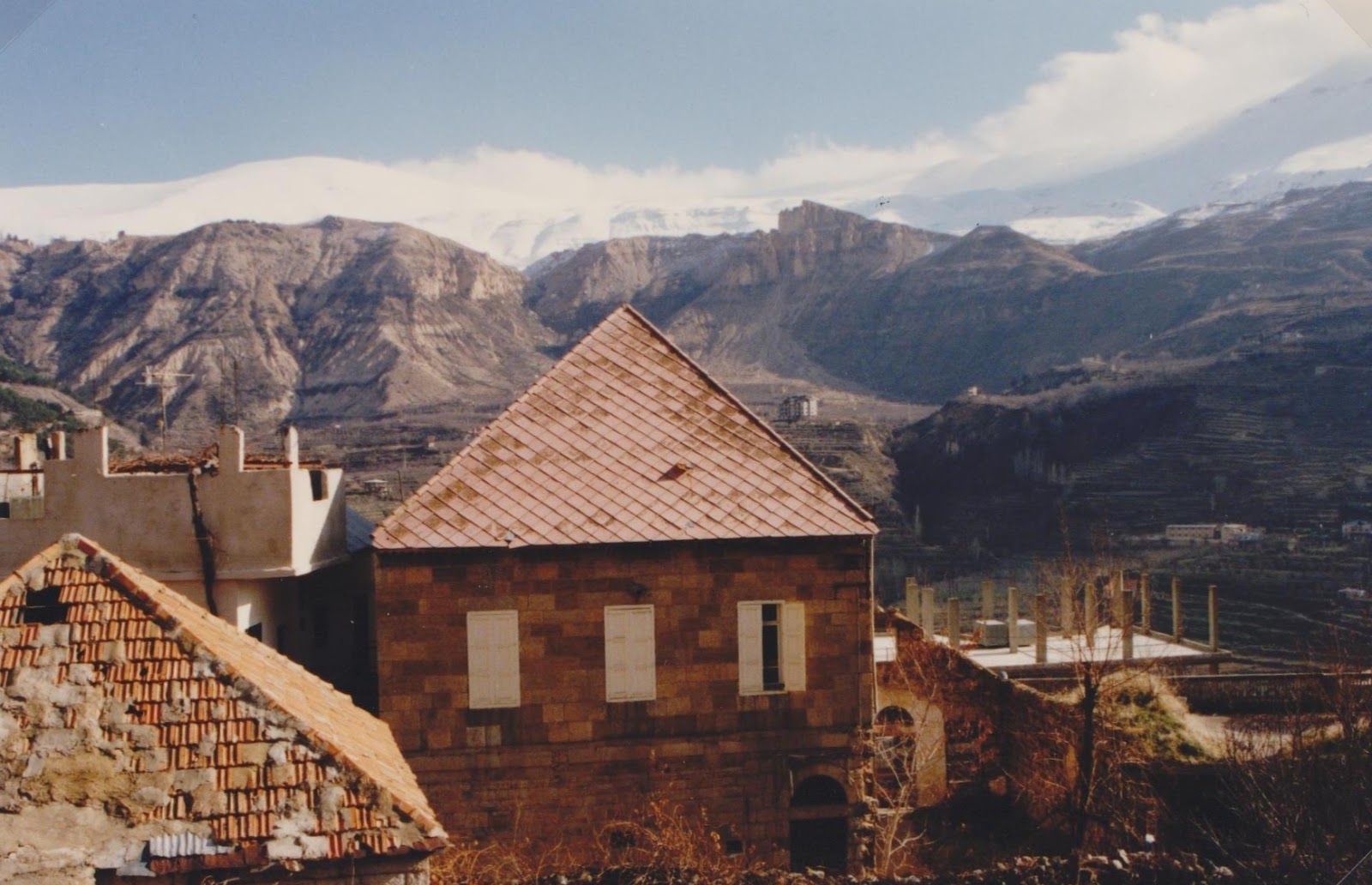
The Kadisha Valley in Lebanon’s north is a traditional Maronite Christian stronghold and Lebanon’s civil war in the 1980s cannot but have encouraged that.  Opinions seemed ridged, or so I assumed, memories too fresh.  I felt lucky not to be directly affected by that history.  But Bangladesh played no role in that war and neither had I, so could I not have mentioned the similarity between Bangladeshi Muslim hospitality and their hospitality-of-the-cedars?

They say that little Lebanon is a country where you can ski and swim in the same day and I’d taken the bus from Tripoli on Lebanon’s Mediterranean to the heights of the valley to stand at the base of a ski slope.  I wasn’t there to ski but to admire the trees.  I wanted to see the cedars.

Those trees are not only Lebanon’s national symbol, featured on the flag.  The rings of history are the essence of their trunks.  Ancient Egyptians used their resin in mummification and with the boats the Phoenicians built with their timbers they spread their civilisation across the Mediterranean.  In the Sumerian Epic of Gilgamesh the cedar forests were considered the dwelling of the Gods, while Moses, according to the Bible, used their bark in circumcisions and to cure leprosy.  King Solomon’s temple was built from their wood.

There aren’t many of Lebanon’s cedars left, and for the most part they are difficult to access; and all I got to see were a few specimens in the town of Bcharre, which doubles as a ski resort.  It’s not that there haven’t been attempts to preserve them: Roman Emperor Hadrian decreed a law to this effect as did the Mamluk Caliphs.  In 1876 Queen Victoria financed a wall to protect their limbs from foraging goats.

There were trees, just a few, and they were just trees.  But the cedars are Lebanon and the heritage of half the world.

Yet in the Kadisha Valley where names tend to echo it wasn’t Biblical or Ancient ones that seemed to predominate.  Rather there were two of more modern vintage: the early twentieth century Lebanese-American artist, poet and writer Khalil Gibran who was born in Bcharre, where there is a museum dedicated to his life that was closed on a Sunday; and the nineteenth century Maronite Christian saint, St. Charbel Makhluf.

I discovered this because there was no bus down the mountain again.  It’s the sort of thing I am good at neglecting to plan, return transport.  Better still I hoped to reach Beirut by late evening.  There’s a freeway that runs along the coast and it is possible, theoretically, to see the cedars and reach the capital in the same day. 


I stood on the little road through Bcharre and waited for a passing car. 

And it was Lebanon so the very first one stopped.

Tony was driving and his friend was there.  But the small thrill of not having to wait for more than thirty seconds was undone when he said they lived in the next village and would only go that far.  It was nonetheless a small start.

It can’t have been more than ten minutes to his village, but in the ten minutes we struck up a conversation.  He strung English words together in a similar fashion to the largish house he’d constructed, room by room as he could, by his own hand.  Coffee was offered.  Yes, Beirut was far, but perhaps a thick, black coffee wouldn’t hurt.


It helped being an Australian because in the 1980s Australia had more compassion to it than it has these days and many Lebanese refugees resettled there.  In Lebanon everybody had a relative or neighbour that now lived in Sydney. 

His wife made the coffee and it didn’t take long.  Tony was proud of the house he’d built, as he should have been.  By the end of the coffee his friend had extended an invitation to his house and Tony had suggested a walk around the village, in particular to see a special church nearby.  Yes, Beirut was far but perhaps a village tour wouldn’t hurt.  Local insight: the traveller’s jewel.

Of the village there’s little to report apart from the striking valley views and that about every second home was boarded up.  Why is that, I asked Tony.  ‘They all live in Sydney,’ he said, ‘but they come here from time to time.’

Of the church, well, it was remarkable.  It was built into a cliff face with a small round hole and a ladder that had to be climbed to get inside.  The church itself was a narrow section, a ledge walled up on the outside with some kind of bricks, compact and historical.  It was built in the time of wars between Muslims and Christians, in centuries past, and, Tony explained, the ladder entry enabled the priests inside to protect themselves.  They kept swords to use on any that might think to climb that ladder to attack them.

I wouldn’t have seen that church if it wasn’t for Tony.  At his friend’s house, again over coffee, he said it was really rather better to stay the night and leave in the morning; and yes, Beirut was far.  Perhaps a day later wouldn’t hurt: I really had no fixed schedule.

For dinner, Tony’s wife made a type of kebab wrapped in flat bread and I liked that they put them on top of the heater to keep them warm.  We played cards and we must have spoken on many topics, including my travels and life.  But I didn’t mention Bangladesh.

‘Before today,’ Tony said, and I’ll not forget it, ‘you had one house in Sydney.  But now you have two!’  It’s truer that I had many houses, if not exactly on the deed, but I was really touched by the generosity of his words.  And I should have said it: in Bangladesh for guests they make tea.

He spoke of St Charbel, who as a boy tended sheep and spent his days in prayer in the mountains.  He spent years as a Maronite priest recluse in the simplest of circumstances.  Many miracles are attributed to St. Charbel, including after his death when a partially paralysed woman dreamt of him and awoke cured, with the ability to walk again.  She had two wounds in her neck and St. Charbel had said in her dream that he did surgery to heal her as a symbol, to bring people back to their faith.  ‘If you pray to St. Charbel,’ Tony said, ‘Your prayers will be answered.’

On the following day, down the mountain, I made Beirut: all with private transport.  It’s not really a thing to do but I did. 

It’s funny because within two months I’d be riding a Honda in the Rajasthani desert with a friend there telling me with equal sincerity, ‘If you pray to Sai Baba, your prayers will be answered.’  And in Bangladesh, for guests they make tea.

But it was after that, in Sydney, when my thoughts turned once more to the Kadisha Valley.  I penned a letter and sent some photos.  There was no reply which I just assumed was because Tony wasn’t a letter-writing type of guy.  Indeed, it was at least two years later that I even knew he’d received it.

It happened on one evening when I was at home, in the flat I was renting in a predominantly Muslim suburb of Sydney.  The phone rang.  It was George.  I can say categorically that there’s nothing wrong with receiving a telephone call from George except that I didn’t know any George.  And this George, how did he get my phone number?  ‘I’m Tony’s cousin,’ he said, ‘I live in Sydney but I’ve just been to Lebanon and he was talking a lot about you.  I want to meet you.’

‘Some guy called George rang for you,’ my sister said, without a thought, on the next day, ‘I gave him your number.’

I went to see George one afternoon, how could I not, for coffee, baklava sweets  and chat about the Kadisha Valley and his cousin Tony.   And I couldn’t help it.  I should have known better.  I told him what Tony said about having an extra home, the words stuck in my mind.  ‘Before today,’ said George, ‘you had two homes, but now you have three.’  And in Bangladesh, I should’ve explained it, for guests they  make tea.

‘Spare me the political events and power struggles,’ wrote Gibran, ‘as the whole earth is my homeland and all men are my fellow countrymen.’  Well, that’s what I learnt from the cedars: Lebanon, the heritage of half the world.


But the pigeons are flying to Syria, but there's a wedding going on in Africa, but don't forget the oak tree... 

And in Bangladesh, they make tea.


This article also published in The Star, here: Valley of Faith


Welcome to Vilnius


Photos: Ragnar Scheen


You can look, but while you might find seasons in the politics you won’t find politics in the seasons.

Autumn: the tracks appeared to trace a stream below, or several but as the train meandered along hillsides direction was difficult to contemplate.  The morning was reluctant and the wooded valleys were almost drained of colour.  In the yellow of the last leaves and the low grasses was a sense of farewell to the year; and while the white of the birch trunks had momentarily gained prominence and the first snow must’ve fallen by then, winter’s renovation remained awaited.  Primarily it was a landscape descending into brown, into the darkness of pine and wooden Belarusian villages.  It was the story of a border lost somewhere too in the season.

It was rather in the speed of the train, in the slowing, the pausing and the chugging along a little further that the border was at first suggested, as though there might be a schedule to the crossing.  Only when it seemed that the wood and the hillside might stretch beyond the autumn did other evidence appear.  It came in the unlikely form of low concrete posts, set among the trees in pairs, like statues of a long ago out-of-love couple meeting in the forest for old time’s sake, or perhaps to collect wood for the fire of their old age.  In each pair the nearer was painted red and green, for Belarus, while its mate was white with the feature of stripes in yellow, green and red: the stripes of Lithuania.  That old couple came near and withdrew: like the train the border held no steady course.

And it is possible to try to protect the blessings of the past from the uncertainties of the future.  And it is possible to try to safeguard the future from the ravages of the past.

In a pause in the forest the Belarusian guards boarded, to see that the passenger had all he papers they could wish for, including hotel receipts to account for every night in the country.  Beyond the post-couple the Lithuanians boarded, but for them the passport checking felt more as an afterthought, a ‘suppose we should know who is coming into the country.’  Perhaps their preference might more naturally have been to sleep longer, under the blanket away from autumn.

But a passport with a kangaroo on its cover was as the yellow leaves in the woods, it brought a slight energy with it, surprised as they were to see it.  Enquiries were made, assurances came that no visa was required.  Somebody official must’ve checked a nationality list.

The Vilnius station, not an hour from the border, sits upon a hill with the centre of the old town in the cobblestone capital in a small valley below.  There are about 500,000 people in Vilnius, 3 million in Lithuania.

I trailed the other passengers moving down into damp streets.  While for many, they must’ve been coming home; while for others, they must’ve been there a thousand times before: I was busy not knowing where I was going, taking in the charms of history as recorded in the buildings as I followed a random road.  Church spires multiplied as the valley city took over.

Too, I was busy contemplating the need for a scientist, how to, in a new place, locate a pathologist in a diagnostic centre.  It’s not that I’d befallen any illness, fortunately.  I required no tests and indeed it wasn’t just any pathologist that would do.  I needed one called Rita.

Lithuania has a long history.  They say its language is of the Baltic branch and related to Latvian, and that it’s the most conservative language in Europe, the one that’s evolved the least from the Sanskrit roots of the Indo-European language family.  They say there’s a village in Lithuania’s north called Indija, where local linguistic peculiarities have some commonality with languages still spoken in Pakistan’s Baltistan.

Once, at the end of the fourteenth century, the Grand Duchy of Lithuania was one of the largest countries in Europe, with territory stretching to the Black Sea.  And in 1991 the country made its mark on history again, as the first Soviet republic to declare independence, a move that cost the lives of 14 Lithuanians when the Soviet Army attacked the Vilnius TV Tower.  But the movement had history’s blessing.  The Soviet break-up started in Lithuania.

In a way it was that transition that paved the way for my need of a pathologist.  When the borders opened, a Norwegian friend of mine Ragnar was sent to the country on business.  As that business over the years developed so did his passion for Lithuania.  He took the country into his heart or maybe it captured him.  But beyond business he contributed in various ways, to promote modernity and development.  He’d taken an apartment in Vilnius and although he wasn’t arriving until the following day I was lucky, because a pathologist called Rita held for me the keys.

I kept in mind my general luck too in finding new addresses in unknown cities.  I kept my eyes on the works of art that were the buildings of the old town.  I took in the signs of each snaking alleyway just as the signs of autumn had taken in me.  There were Northern European style shops playing American background music.  I saw proper supermarkets with metal poles outside to tie your pet dog to.  There were large bookstores, music stores and cafés. 


Although I missed Ukraine already, where I’d been living that year; although I enjoyed Belarus, memories stirred.  It was as though in Vilnius I’d arrived back into a happy Northern European past.  All the same, should a chimney sweep have passed by on the street it wouldn’t have seemed altogether out of place.

There may have been queries with people on the street but I found the alleyway I needed.  Soon I was sitting opposite Rita-in-a-white-lab-coat and drinking a cup of coffee.  There was a book open on the desk between us with multicoloured microscope pictures on its pages.  I wondered how to diagnose my being there: I doubt there are multicoloured microscope pictures that can do that.  Perhaps it was simply the autumn that had taken me in that direction.  Rita picked up the phone and dialled Norway.

When she was able to, she whisked me across the city by car, to Ragnar’s apartment: open-plan, modern and with that wooden, pine-type smell that can easily remind one of Oslo.  It had a peaked wooden roof with no ceiling and on the table was a note, in Norwegian, to me.  ‘Welcome to Vilnius,’ it read, ‘Try the beer in the fridge.  Lithuanian beer is good.’  In retrospect I’d say it was probably the most modern accommodation I’d had for the best part of a year.

The apartment was an art gallery: a fish swimming from a rafter, wooden angels over there and of course, candles everywhere.  I surveyed the room and found again that smile that had been with me since I’d left Belarus, the re-finding of a different Northern European dimension to life.

Ragnar arrived from Oslo the next day.  It was the first time we’d met in five and a half years.  We spoke English, then Norwegian once again, and the hardest part was the ‘yes’, the rediscovering an automatic Norwegian ‘ja, ja, ja’ to replace the Russian ‘da, da, da’ I’d picked up in East Ukraine, although I was never skilled at Russian.

We found a restaurant some floors below street level, in a ‘mind your head’ type of cellar.  They served sausages by the half-metre and beer in tall glasses, by the metre.  We walked around the castle and up the hill to the historic three white crosses that were destroyed in the Soviet era but were rebuilt when the politics turned.

And in the evening we walked to the end of the street to find a forest overlooking a river.  It was a landscape descending into brown, at that time of the year.


------------------------------------------------

“Look! From the glowing west, forceful and angry winds
Are eastward moving with ferocious, headlong haste,
And bringing biting frosts to our Lithuania dear.
My friends, let’s to the house and build a glowing blaze.”[1]

-         From the poem Metai, or The Seasons, by Kristijonas Donelaitis.  This epic poem from about 1765 is considered the first classical piece of fiction written in the Lithuanian language.  From the third part of the poem, ‘Autumn Boon’.


Stay Happily Baltic, with Latvia or Estonia!

Retire eastwards back to Belarus.


This article also published in Star Magazine, here: Welcome to Vilnius


[1] English translation of the poem is here: http://members.efn.org/~valdas/autumn.html

Diabula Did It


It must’ve taken a measure of bravery for the Portuguese to first set out on their voyages of discovery in the fifteenth century.  With the weight of the unknown, the myths of sea monsters and risk of falling off the edge of a flat world they nonetheless set forth.  By the following century they’d made it as far as the Bay of Bengal where ultimately they established a port in Chittagong and a settlement on nearby Sandwip Island.  But did they ever get lost along the way?  From time to time they must have.  And when they got lost, could it be that the Portuguese turned their sails around while at the same time cursing the very devil for having deceived them?

Kashem Bhai of Rahania village in modern-day Hatiya is not Portuguese and he certainly has little in common with Henry the Navigator or Vasco Da Gama.  Unlike any Portuguese explorer indeed, it is with considerable care that Kashem Bhai contemplates his actions, and the actions of others.  He’s someone who finds no delight in risk-taking. 

In the night sky over Hatiya, every few minutes there are the lights of planes, transcontinental, small and very high.  We’ve considered it might be the Hong Kong to Dubai route.  While watching the planes, Kashem Bhai has been known to remark, ‘How risky!  Do people really need to do that?  Why do they take such risks?’  He’s rehearsed a rather nice sound of a plane falling from the sky: durrrumm!  It’s safe to assume he belongs to my grandmother’s school of thought, that if people were meant to fly they’d have grown wings.  And it’s not the only risky behaviour Kashem Bhai has noticed among his fellow humans.

There’s also the important matter of ceiling fans.  Kashem Bhai wonders how it is that people can sleep under them, what should happen if during the night the fan were to fall.  ‘How risky!’ he says, ‘Why do people trust their lives to a single, small screw!’ He means the one holding the fan in place.  ‘Is it really necessary?’  Living in Rahania, Kashem Bhai is lucky not to have to face the threat of ceiling fans often.  On any island electricity is not a straightforward matter and what electricity there is in Hatiya seems to have got lost somewhere along the way to Kashem’s village.

It comes as a surprise, therefore, to hear of the occasion when Kashem Bhai’s careful planning and risk avoidance considerations failed him.  It was on a day that started like any other.  As with many a villager, Kashem’s hours are normally consumed with chores and duties, household this and marketing that.  But on that day Kashem Bhai decided he was in need of rest, and as he lives by the Hatiyan coastline it was little trouble to gather a few friends and propose several hours of adda at the beach.  There’s usually a welcome breeze blowing in from the Bay of Bengal there, he knew, and it’s not a place where the day’s duties could track him down.

Getting there presents few problems.  It’s simple enough to follow path-and-aisle between the rice fields and to negotiate the muddy crossings of the tidal channels in the open land they call ‘The Garden.’ Nor is it overly challenging to zigzag through gaps in the coastal shawl of the mangroves beyond.  There’s usually a patch of dry sand or a grassy clearing nearby; the local fishermen can advise as to the best place for adda on any day, in accordance with the Bay of Bengal’s latest artistry. 

But it’s also a simple scientific fact that adda is not restricted by daylight or tides, and it was well into the afternoon the small party of conversationalists thought to return.  The best way back changes as tides come in and in the darkness it’s not as simple to watch out for cobras; nor are there too many paths to choose from due to the channels and the rice fields.  But as that afternoon wore on there arose an even more pressing problem: society and that peculiar disadvantage of being a respectable member of it.

Unfortunately, on the very day Kashem Bhai determined to go to the beach was also scheduled an important shalish, a public mediation.  Even from the beach Kashem could see the distant bazaar was crowded with onlookers and participants, ready for the event.  Kashem Bhai considered his reputation: what would people think if they saw his little group of friends returning from the beach at a late hour?  Would word of their wasting time on adda reach their wives?  So they waited.

Unfortunately the mediation was a land dispute that had generated a good deal of interest.  There was much to be said and technicalities to be considered.  It’s a simple scientific fact that village mediations are not restricted by daylight or tides.  As the path to the bazaar started fading towards darkness and the water started coming in, it seemed as though the shalish would never end. 

Eventually the group could wait no longer; but if perhaps they walked apart they might yet be able to reach their homes inconspicuously.  At any rate they’d need to try.  One by one they set off: through the mangroves, jumping over muddy channels and weaving a way through The Garden.

The crowd proved to be a blessing, with each of Kashem’s friends able to enter the market from the sea side unhindered and without remark.  It was dark by then.  But unfortunately, just as Kashem Bhai’s feet found the start of the bazaar he was spotted.  ‘Kashem Miah, where have you been?’ Abdullah Member asked.

Kashem Bhai didn’t know what to say.  But fortune favoured him because after a moment a convenient skerrick of local folklore came to mind: the legendary Diabula.

Kashem embarked upon a carefully crafted tale, about how he had been walking home from the bazaar to his house as he usually might, when for some reason he found himself walking and walking, still walking, and still not seeming to cover the short distance to his home.  Finding his situation odd, Kashem Bhai explained, he started to think it was Diabula’s work. 

In Hatiya, Diabula is an invisible spirit but not a jinn or a bhoot of the ordinary sort.  Diabula has the particular trick of snatching people’s sense of direction and leading them astray; and people are at greatest risk of attack when they walk alone.

Kashem Bhai told Abdullah Member that he stopped walking and on suspicions of Diabula thought to turn his lungee upside down.  This action is the commonly understood remedy for Diabula’s handiwork.  And when he did so, just about half an hour earlier, Kashem Bhai continued, he was shocked to find himself, quite inexplicably, at the beach!

Having enjoyed the little tale, Abdullah Member could have no further questions.

It’s strange to think that the Portuguese journeys of several hundred years ago may have assisted Kashem Bhai as he entered the bazaar that day.  It’s just a theory, but is it impossible to imagine that the islanders’ Diabula was long ago derived from the Portuguese diabo, the word for the devil? 

Hatiya Island didn’t exist when the Portuguese came to the Bay of Bengal, it’s a much younger island; but many Hatiyalas have an ancestry from the older Sandwip, far to the east.  And when I mentioned Diabula to a Sandwipian friend he knew what it was immediately; he also knew to turn his lungee upside down in the case of a Diabula attack.  Meanwhile those few people I asked from inland districts of Bangladesh had never heard of Diabula.


There Shall Have Been Jaisalmer


There could even be future predictions in those books.  Who’s to say there isn’t?  Who’s to say what wisdom is there, in the rare manuscripts and ancient tomes of the libraries of Jaisalmer, where the dry desert air is favourable to conservation?  Yet here, I embark upon a far humbler task: of predicting the past.

As once there came tribesmen into the arid territories of the Thar, as once there came herdsmen driving cattle and flocks of goats to forage among the thorny, scrubby bushes and desert grasses of that marginal country; as once there came wayfarers and traders from east and west, with textile, gemstone and treasure chest; so it shall come to pass that western backpackers, two, shall arrive in a white Ambassador that shall have been hired from Something-or-Other Tours & Travels in Delhi.

Over the centuries, in places where wells and tanks have been dug and there is water to drink, settlements shall have emerged and, gradually, a small but dignified desert kingdom shall have been established.  There shall be palaces and forts built for the Bhati Rajput royalty and the capital shall have taken the name of its founder, Maharawal Jaisal Singh.  At a time long after the camel caravans from Central Asia, Africa and Egypt have ceased to come; long after the several neighbouring kingdoms have been combined into Rajasthan, the land of the kings; and many years after the Pakistani border has been etched across the map, the backpackers shall have reached Jaisalmer to see all that has gone before them.

And they shall have with them a driver, who in his previous life was a bear.  That very driver shall have steered the Ambassador in safety across the nearer Rajasthani plains, dodging camel cart and swerving around cattle herd; and he shall have stopped to undertake urgent on-road mechanical tinkering as they navigated the ribbons of tar of the Thar.  In Jaisalmer, so shall it have been that they took rest.

Let it be said that they shall have stayed in a hotel near the large tank to the city’s south, the tank that’s embellished with minor temples around its edges.  They shall have heard the rumour that the main gate to the tank was presented to the Maharawal by a well-to-do lady-of-the-night, and when he disagreed to its construction due to considerations of propriety, she did it anyway, while he was away, incorporating a Krishna Temple in its uppermost storey so that he could not object to passing beneath it.

Let it be written here that they shall have enjoyed one sunset at the tank and have found the following sunrise while eating breakfast on the hotel rooftop, with views to the fort and the old city within its walls.  Let it be known how they visited that city of laneways, with its Jain temples and its haveli mansions in filigree design, of delicate craftsmanship, that shall have been constructed long before by the once wealthy families of trade.  By the time of the Ambassador’s arrival, the city in all its history shall be there, perched upon its hilltop in the Thar, Jaisalmer: the golden city.

So too shall they have visited the shops of souvenirs and desert jewellery in turquoise gemstone, silver and lapis lazuli.  They shall have known the carpet stores where dozens of carpets are to be unfurled upon arrival, as potential customers sip tea.  They shall have met the Singaporean ladies, three, down from Kashmir; and they shall have heard the Singaporean critique that westerners usually prefer carpets in bold, contrasting colours.  And it shall have amused them as the Singaporeans chose their own carpets in not less predictable pastel shades of aqua and rose.  To each group shall be their own traditions.  But it shall not have mattered in any substantial way, because the carpet stores are stocked for all comers, from the east and from the west.

Verily I say that on the third day they shall have organised a tour, by jeep and by camel, to the sand dunes of Sam.  As His Royal Highness the Maharawal could tell you, winter nights in the desert are cool and the locality of Sam follows that pattern.  But kindling for the campfire shall have been brought from afar, due to the lack of trees, and the locals shall have donned military type jackets and factory knitted shawls.  The foreigners, meanwhile, shall have unrolled their technologically designed sleeping bags that come with guarantees of withstanding a specified number of minus degrees, the sleeping bags which their mothers shall have made them bring.  They shall have slept in the open, with Australian pillows, under the Indian stars. 

And those foreigners shall know nothing, not how to survive in the desert nor even how to speak the Rajasthani tongue; but they shall have eaten well, the dinner prescribed by the tour agreement.  Meanwhile the locals shall have busied themselves in poaching: cooking and eating a small desert deer.  The locals shall have imbibed from desert wells while the foreigners had bottled water from a distant alpine spring.

On the following day there shall have been camels, two, for the ride back into town, a ride of several hours, and I tell you they are tall beasts such that when the camel one is sat upon is elderly, with arthritic knees causing it to sometimes stumble on rocky ground, when there is the sound of leg bones creaking as it walks, it’s not an altogether calming experience.  ‘Does he ever actually fall over?’ shall have been asked in sign language, as best it could be done.  ‘Sometimes,’ the camel driver shall have made him to understand by way of reply.

And the he-camel shall have passed beside she-camels and there shall have been bellowing, camel lips inverted with bubbling froth welling up from a camel mouth.  Camels live for about twenty years, they shall have heard, with a working life from two to sixteen.

So let it be recorded as it shall have been done.  It is my past prediction.  They shall have seen Jaisalmer.


But being a patriot, I suppose 6th century art critic Xie He might have preferred the mountains of his China.  Fruit adorers might like instead the mango tree gardens of Malda Town, or after the desert wanderings of Jaisalmer, it might be time to get lost in the rain.

It's up to you. Nobody's telling you what to do. It's your choice.


This article is also published in Star Magazine, here: They Shall Have Seen Jaisalmer


India Will Decide: Article Index for articles about India
Free counter and web stats