Showing posts with label mountains. Show all posts

Oxygen


I

Three thousand, three thousand two hundred and beyond… In the Humahuaca Valley in northwest Argentina the altitude sets in and the human body’s resilience is tested. Just how much oxygen does a body need, anyway?

Normally there’s a mild headache that stretches on from several yesterdays. Normally there’s shortness of breath and lethargy. On a first occasion though, during a first clash with the heights, it must be usual to wonder through the night if the symptoms remain within that normal range. As there’s no past experience, nothing to compare an individual reaction to, there’s no exact measurement to be had.

Is this how initial acclimatisation should feel? Is it static? Is it getting worse?

What’s known: not all human bodies are the same. Elevations affect people differently and while three thousand plus metres is not nearly as high as we can go, at some point there comes for everyone that stage where the body is deteriorating faster than it can adjust – when, oxygen-starved, a body slowly dies. It’s not clear just at what elevation a body will succumb to altitude sickness. The only way to know about the nature of one’s own body is to try.

It’s supposed to take about a month to fully adjust. The body produces more red blood cells to better grab oxygen at lower air pressure. Usually after a few days the headache will go, and the breathlessness will gradually dissipate over the coming weeks. Usually the lethargy does not last.

But is this how acclimatisation should feel?


II

The country was a galaxy in grandeur, the bus turned into a toy with its passengers as pinheads, ants. In a landscape like that, of soft yellows, reds and browns, vast and empty, the human is easily understood to be not more than an unimpressive bag of chemicals, affected by changing conditions and prone to reactions. We’re no stronger than the wind and the air.

The country had been creative, with cacti decorated desert hillsides and twisted, multicoloured cliffs that earned their poetic names like the ‘Artist’s Palette,’ and looked as a great wealth of minerals. There were windblown rock formations and it was worth the breathing strain to see it.

Yet from the reaction to the lower pressure it should’ve been some alpine expedition. It should have been on foot with a walking stick, possibly ropes. There shouldn’t have been a bus service at all, nor a highway, nor beyond that open country, buildings.

That the human species has colonised almost every terrestrial environment would account for the two small towns on either side of the bridge. It would explain La Quiaca and Villazon.

It was time to get out and try to stretch one’s legs, because the future was up ahead, across the little bridge, where those bags of cement were, at great speed, going.


III

They were running across the bridge, hundreds of people, without any formalities. What drove their urgency was at first unclear; that they could run at all was a wonder. Where was the oxygen? Well, they say the locals are born with larger lungs.

It was a colourful procession, short indigenous men and wrinkle-faced women with swinging plaits and carefully balanced bowler hats. They lugged bags of building supplies, grain and cases of fruit, more, unknown boxes and baskets carried in multicoloured aguayo blankets slung over their shoulders and across their backs.

Among the bowler hats were several distinct varieties: black, brown or dark green, full-sized, nicely fit on the head or child-sized and looking a bit precarious, balanced at a fashionable side angle.

To the left, another line was coming southwards: people of the same crowd with the same tanned skin and distinctive cheek bones.  They were then carrying nothing but just as quickly. What was all the rush for?

The world has many borders. There’s a winding train line border from Belarus into Vilnius, a muddy channel with reeds between Iran and Iraq, there’s a long line of Tata trucks parked along the road to Haridaspore. And I remember how as another bus had once crossed from Bulgaria to Macedonia the passengers had hid cartons of cigarettes on the bus roof through the skylight as it drove slowly enough not to knock them off, through the checkpoint.

Still, of all borders it’s that one, La Quiaca in Argentina to Villazon in Bolivia, which is one of the strangest of all.

Why were they running? A tourist said they were contrabandistas, desperately smuggling as many loads of Argentina back into Bolivia as they could while Argentine customs officers stopped for lunch and siesta. It was a street market on the run; it seemed as if half of Argentina would be removed and resold before the customs post reopened.

Argentina has a Titanic-sized human border leak that’s impossible to fix; only a few people stood in the official queue.

And although it was but a small bridge it was a border that seemed natural, due to contrast, not least in the human faces to the north and to the south.

To the south was a largely immigrant country with a strong Italian influence that altered the pronunciation of the Spanish language. To the north there was an indigenous majority country still waiting, as at 2005, for its first indigenous president, an achievement which was surprisingly just one year away. His name was Evo Morales and people would speak of the end of Andean Apartheid after his election.

I wondered what it would be like to have an indigenous Bolivian friend, Quechua or Aymara. Would such a friendship have a distinctive Andean shape to it and how would it fit into the rest-of-life jigsaw, so entirely different as to be left waiting to one side, unable to place? What would life be like in La Paz, after I took up my new Bolivian job?

I remembered my mother, who’d warned me to watch out for the multitude sickness. I can only imagine that’s a rare type of affliction which strikes in elevated locations that are also crowded, places just like the La Quiaca – Villazon border.

And there, incidentally, running is certainly not as obvious an activity as stopping to catch breath.


IV

The Bolivian official reminded me, ‘thirty days’ as he stamped my passport. I thought he was fishing for an insistence on ninety for a small unofficial fee, but I might be wrong about that. In any case it was already planned to pursue a work visa, a process into which a week of my life would disappear, later, in the Bolivian capital.

My first Bolivian steps were in the town of Villazon, which, apart from that Andean dust you can’t do anything about, was clean and fastidiously swept. Somehow I’d imagined a more chaotic Bolivia.

They had an organised ticket system at the railway station and with my newly acquired Bolivianos I bought a ticket for Tupiza, the nearest town.

A robust train conductor in a hard cylindrical cap with a tin sign across it, labelling him in Spanish, greeted passengers at the carriage door; and he religiously swept the carriage every half hour or so.

I sat dusty-comfortable, watching the on-train video of traditionally costumed Bolivians dancing around a train, to the eclectic rhythms of Andean cumbias, and the out-the-window movie of banded dry hills, small gullies, distant mountains and a sunset over cactus flats.


There were a few adobe hut villages with washing drying on thorny bushes by a stream. The occasional goods truck chewed up dust and bowler hatted, long plaited goat herders walked from somewhere over the horizon to somewhere else over the horizon. Finally, there was night.


More Argentina...


More Bolivia...


More Mountains, or... 


This article also published in Star Magazine, here: Oxygen


Valley of Faith


Perhaps it was wrong to assume.  Perhaps I was wrong to think that because wars leave scars they mightn’t want to hear about it.  It can be that the fissures brought to human understanding by communalism are not easy to ford, but it’s equally true that humans are adaptable and flexible.  They can heal.  Perhaps I underestimated them and it was cowardly not to mention Bangladesh.

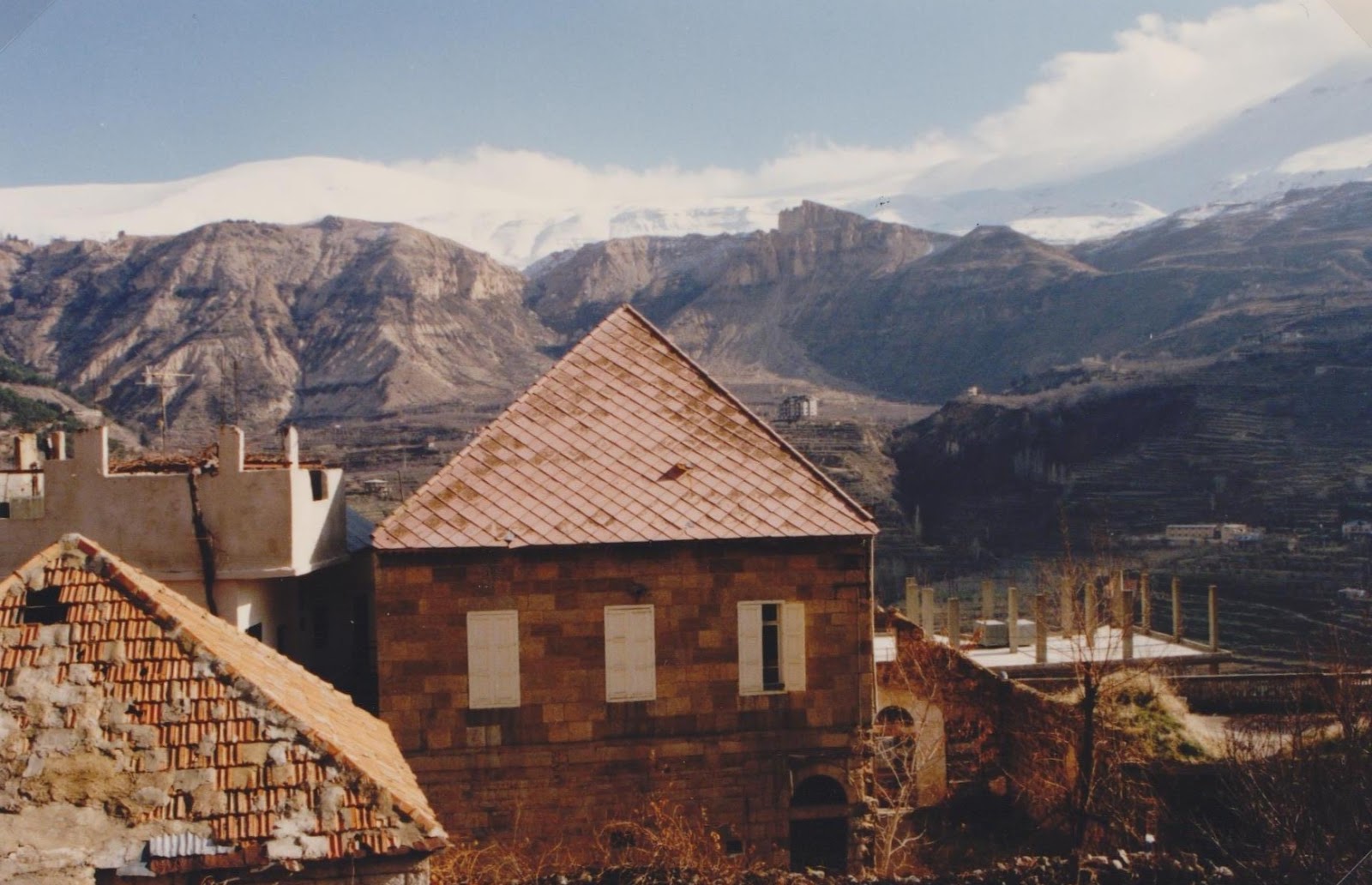
The Kadisha Valley in Lebanon’s north is a traditional Maronite Christian stronghold and Lebanon’s civil war in the 1980s cannot but have encouraged that.  Opinions seemed ridged, or so I assumed, memories too fresh.  I felt lucky not to be directly affected by that history.  But Bangladesh played no role in that war and neither had I, so could I not have mentioned the similarity between Bangladeshi Muslim hospitality and their hospitality-of-the-cedars?

They say that little Lebanon is a country where you can ski and swim in the same day and I’d taken the bus from Tripoli on Lebanon’s Mediterranean to the heights of the valley to stand at the base of a ski slope.  I wasn’t there to ski but to admire the trees.  I wanted to see the cedars.

Those trees are not only Lebanon’s national symbol, featured on the flag.  The rings of history are the essence of their trunks.  Ancient Egyptians used their resin in mummification and with the boats the Phoenicians built with their timbers they spread their civilisation across the Mediterranean.  In the Sumerian Epic of Gilgamesh the cedar forests were considered the dwelling of the Gods, while Moses, according to the Bible, used their bark in circumcisions and to cure leprosy.  King Solomon’s temple was built from their wood.

There aren’t many of Lebanon’s cedars left, and for the most part they are difficult to access; and all I got to see were a few specimens in the town of Bcharre, which doubles as a ski resort.  It’s not that there haven’t been attempts to preserve them: Roman Emperor Hadrian decreed a law to this effect as did the Mamluk Caliphs.  In 1876 Queen Victoria financed a wall to protect their limbs from foraging goats.

There were trees, just a few, and they were just trees.  But the cedars are Lebanon and the heritage of half the world.

Yet in the Kadisha Valley where names tend to echo it wasn’t Biblical or Ancient ones that seemed to predominate.  Rather there were two of more modern vintage: the early twentieth century Lebanese-American artist, poet and writer Khalil Gibran who was born in Bcharre, where there is a museum dedicated to his life that was closed on a Sunday; and the nineteenth century Maronite Christian saint, St. Charbel Makhluf.

I discovered this because there was no bus down the mountain again.  It’s the sort of thing I am good at neglecting to plan, return transport.  Better still I hoped to reach Beirut by late evening.  There’s a freeway that runs along the coast and it is possible, theoretically, to see the cedars and reach the capital in the same day. 


I stood on the little road through Bcharre and waited for a passing car. 

And it was Lebanon so the very first one stopped.

Tony was driving and his friend was there.  But the small thrill of not having to wait for more than thirty seconds was undone when he said they lived in the next village and would only go that far.  It was nonetheless a small start.

It can’t have been more than ten minutes to his village, but in the ten minutes we struck up a conversation.  He strung English words together in a similar fashion to the largish house he’d constructed, room by room as he could, by his own hand.  Coffee was offered.  Yes, Beirut was far, but perhaps a thick, black coffee wouldn’t hurt.


It helped being an Australian because in the 1980s Australia had more compassion to it than it has these days and many Lebanese refugees resettled there.  In Lebanon everybody had a relative or neighbour that now lived in Sydney

His wife made the coffee and it didn’t take long.  Tony was proud of the house he’d built, as he should have been.  By the end of the coffee his friend had extended an invitation to his house and Tony had suggested a walk around the village, in particular to see a special church nearby.  Yes, Beirut was far but perhaps a village tour wouldn’t hurt.  Local insight: the traveller’s jewel.

Of the village there’s little to report apart from the striking valley views and that about every second home was boarded up.  Why is that, I asked Tony.  ‘They all live in Sydney,’ he said, ‘but they come here from time to time.’

Of the church, well, it was remarkable.  It was built into a cliff face with a small round hole and a ladder that had to be climbed to get inside.  The church itself was a narrow section, a ledge walled up on the outside with some kind of bricks, compact and historical.  It was built in the time of wars between Muslims and Christians, in centuries past, and, Tony explained, the ladder entry enabled the priests inside to protect themselves.  They kept swords to use on any that might think to climb that ladder to attack them.

I wouldn’t have seen that church if it wasn’t for Tony.  At his friend’s house, again over coffee, he said it was really rather better to stay the night and leave in the morning; and yes, Beirut was far.  Perhaps a day later wouldn’t hurt: I really had no fixed schedule.

For dinner, Tony’s wife made a type of kebab wrapped in flat bread and I liked that they put them on top of the heater to keep them warm.  We played cards and we must have spoken on many topics, including my travels and life.  But I didn’t mention Bangladesh.

‘Before today,’ Tony said, and I’ll not forget it, ‘you had one house in Sydney.  But now you have two!’  It’s truer that I had many houses, if not exactly on the deed, but I was really touched by the generosity of his words.  And I should have said it: in Bangladesh for guests they make tea.

He spoke of St Charbel, who as a boy tended sheep and spent his days in prayer in the mountains.  He spent years as a Maronite priest recluse in the simplest of circumstances.  Many miracles are attributed to St. Charbel, including after his death when a partially paralysed woman dreamt of him and awoke cured, with the ability to walk again.  She had two wounds in her neck and St. Charbel had said in her dream that he did surgery to heal her as a symbol, to bring people back to their faith.  ‘If you pray to St. Charbel,’ Tony said, ‘Your prayers will be answered.’

On the following day, down the mountain, I made Beirut: all with private transport.  It’s not really a thing to do but I did. 

It’s funny because within two months I’d be riding a Honda in the Rajasthani desert with a friend there telling me with equal sincerity, ‘If you pray to Sai Baba, your prayers will be answered.’  And in Bangladesh, for guests they make tea.

But it was after that, in Sydney, when my thoughts turned once more to the Kadisha Valley.  I penned a letter and sent some photos.  There was no reply which I just assumed was because Tony wasn’t a letter-writing type of guy.  Indeed, it was at least two years later that I even knew he’d received it.

It happened on one evening when I was at home, in the flat I was renting in a predominantly Muslim suburb of Sydney.  The phone rang.  It was George.  I can say categorically that there’s nothing wrong with receiving a telephone call from George except that I didn’t know any George.  And this George, how did he get my phone number?  ‘I’m Tony’s cousin,’ he said, ‘I live in Sydney but I’ve just been to Lebanon and he was talking a lot about you.  I want to meet you.’

‘Some guy called George rang for you,’ my sister said, without a thought, on the next day, ‘I gave him your number.’

I went to see George one afternoon, how could I not, for coffee, baklava sweets  and chat about the Kadisha Valley and his cousin Tony.   And I couldn’t help it.  I should have known better.  I told him what Tony said about having an extra home, the words stuck in my mind.  ‘Before today,’ said George, ‘you had two homes, but now you have three.’  And in Bangladesh, I should’ve explained it, for guests they  make tea.

‘Spare me the political events and power struggles,’ wrote Gibran, ‘as the whole earth is my homeland and all men are my fellow countrymen.’  Well, that’s what I learnt from the cedars: Lebanon, the heritage of half the world.


But the pigeons are flying to Syria, but there's a wedding going on in Africa, but don't forget the oak tree... 

And in Bangladesh, they make tea.


This article also published in The Star, here: Valley of Faith


Free counter and web stats