Showing posts with label Scandinavia. Show all posts

Zero Point


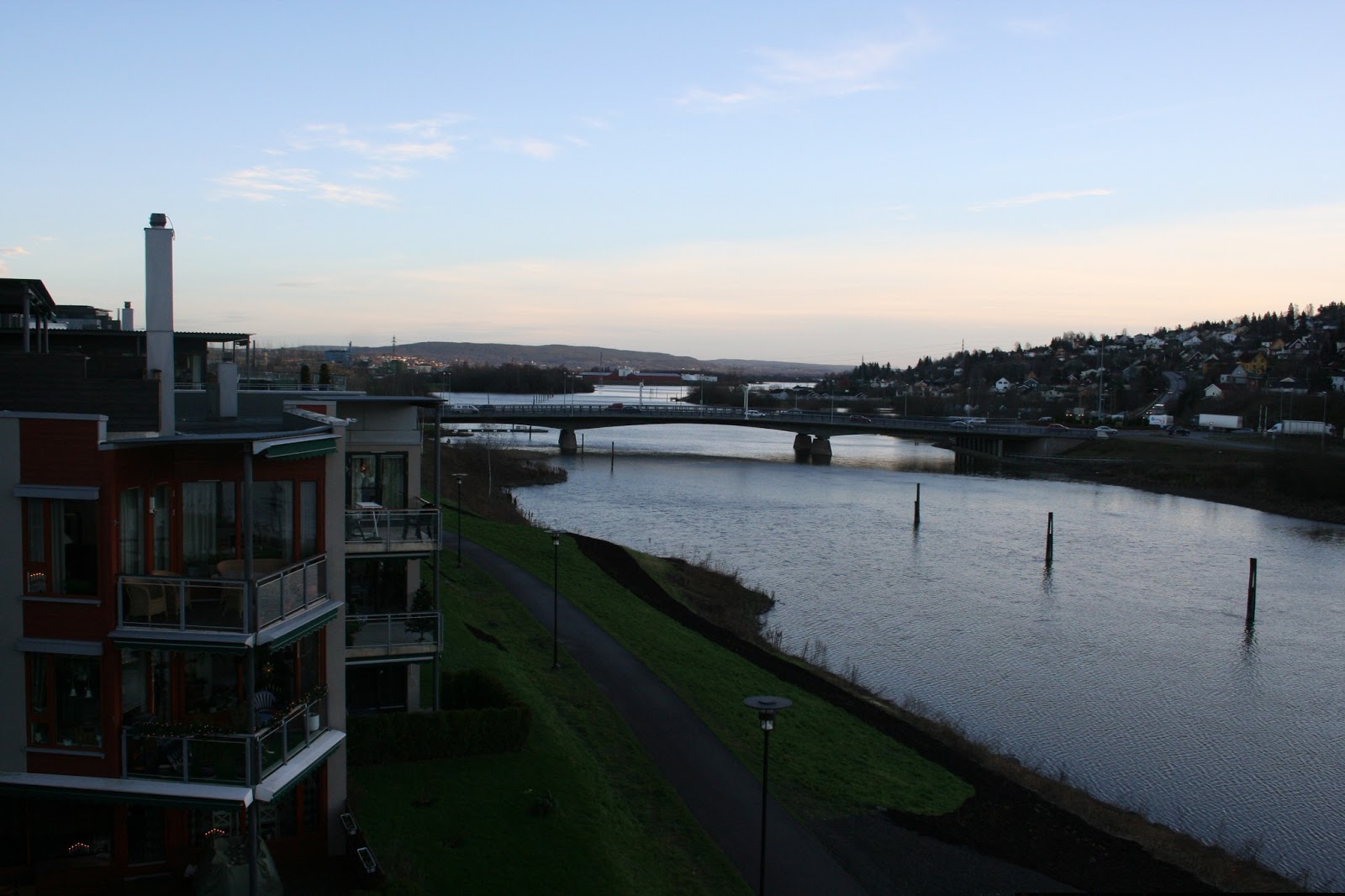
Sunrise over the Nitelva


Besides, just as the heart might be found unexpectedly inhabiting some distant delta, the cogs of the brain might turn their first in a snowy land. 

In the free hours in those initial weeks in Norway, at the zero point, I’d taken to exploring and found that up the street from the Rælingen house suburban Oslo gave way to open country which at the time of year was decked white.  There were deep pockets in the landscape of fields and in one I found an impressive oak tree.  Against the grey skies of the Eastland the stem patterns seemed to mimic the shades and arcs of light in the house and the flicker of the candles.

There was a small pine forest and having grown up in a land of eucalypts I was excited to clamber through it, up the icy slopes with a leg occasionally falling deep into a random hole of snow.  I had all the wonder that Bangladeshis do when they say they’d one day like to see snow, and touch it.
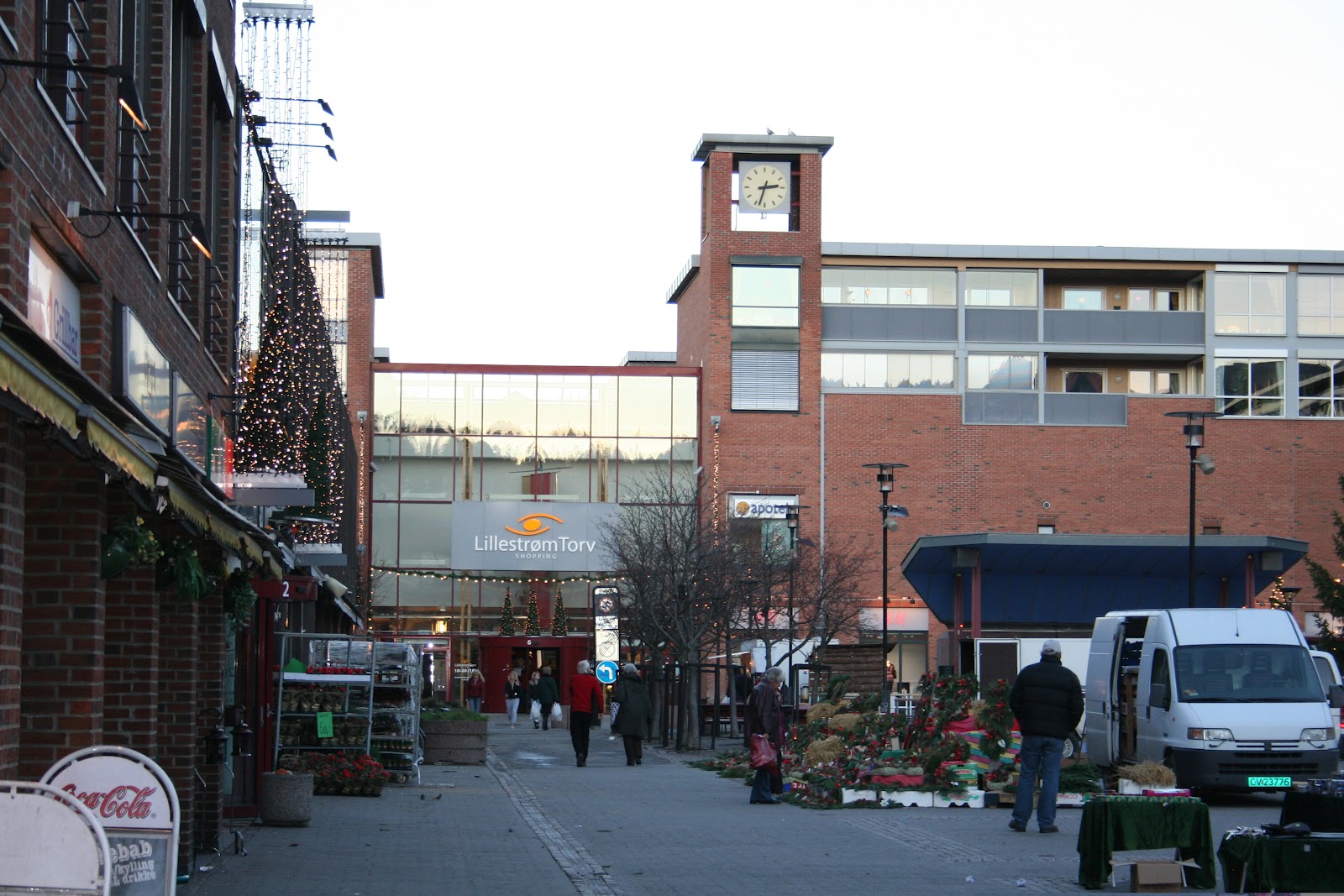
Lillestrøm Town Centre
I was wrong about Gunborg and Olav.  Theirs was not a bingo existence; the Rælingen house was no retirement village.  Perhaps I appreciated that best in the summer, because although I was staying in the Westland by then I continued to visit whenever I had the chance to reach Oslo again.  To my astonishment, that summer Olav sprang about the lawn in his sports outfit.  He leapt and stretched as we played the badminton he’d proposed.  It was tiring.

They were members of a swimming club so we’d swum; they liked to walk so we went to see the wild birds in the river flats a little to the south of Lillestrøm town.  They were members of a pensioner’s ski club and one day we all went cross country skiing.  I was part of a team with an octogenarian leader and all other participants over seventy.  There must’ve been at least some arthritis for them to contend with, but the pace was altogether suitable for an Australian skiing novice.  Maybe it was really me who was seventy.

Meanwhile the oak tree had been busily changing its dress, not into a sports outfit but donning a light green hairdo for spring, a mature deep green summer crown and a short-lived autumn cloak of yellow and brown.  It wasn’t only Gunborg and Olav I came to visit in every season, but the equally active oak tree.

But I get ahead of myself.  In the initial days Gunborg and Olav, ironically, spent some amount of energy concerned that I was bored, despite my saying I wasn’t.  They proposed the museum trips and the National Theatre for a play.   They organised for me to spend one weekend with their eldest son Torgrim and his family; but unfortunately, because of the language difficulties, I hadn’t understood that plan.  Just as we were leaving there was a sudden fussing because I hadn’t packed any clothes.  I had no idea I needed to.

When it became apparent I wasn’t going back with them on the same day, I was quite upset about it, though I said nothing.  I thought I must’ve done something wrong.  I was sure they were bored with me.  And I don’t know what their son thought because I was sullen and consumed in thoughts about what bad and probably Australian thing I might’ve unthinkingly done.  It was only when we went down to their tennis court on the next day that it properly dawned on me, that they thought I would enjoy the change.  Their son’s wife Frøydis asked, ‘Didn’t you bring your tennis shoes?  Didn’t they tell you we’d be playing tennis?’  So I played tennis, embarrassed, in bare feet.

Eventually I challenged the Nitelv.  With courage built I followed footprints through the snow covering the ice of the river, thinking I could turn back if the tracks suddenly stopped by a hole; yet without incident I reached the far side.  My Australian parents would’ve been more than a little concerned; but Gunborg had watched calmly from her kitchen window.  She knew the exact temperature from the thermometer affixed outside the glass pane and from past days she knew the ice was thick.

Walking on ice was a skill to learn, not only on the Nitelv but on the footpaths too; and it came in handy, later, in Hatiya, when fearlessly negotiating the muddy back roads of the monsoon.  There’s something similar about the stepping lightly and placing your body weight with care.

There was one morning they managed to tell me to be sure to take warm clothes as it was six degrees.  I thought I must’ve misunderstood.  Six degrees was hardly that cold: a winter’s night in Sydney might be as low.  I asked several times and surely they were saying ‘six’.  Pleased, I thought I might escape the full horse of clothes and sneak away to class in just a jumper; but I didn’t make it three steps.  In winter Norwegians don’t always vocalise the minus in the temperatures, I learnt. 

Of all meals in Rælingen breakfast was my favourite.  We ate slices of brown bread with paté and gherkins, herring in tomato sauce, Gunborg’s homemade apple jam, cold meats and cheeses: there was Jarlsberg with the holes, ‘key’ cheese with the little crunchy brown pieces in it, goat’s cheese and the soft caramel tasting brown cheese for which Norway is famous.  We’d swallow a teaspoon of cod liver oil washed down with milk, orange juice or filter coffee. 

The evenings shared were often given to pointing at things, with me repeating the Norwegian name; not unlike what would later occur in the tea shops of Hatiya as the villagers taught Bangla.  Sometimes we used dictionaries and Gunborg made sure there was a pad by the kitchen table to supplement with doodles the communication struggle.  I practiced the basic phrases from class and learnt new vocabulary.  They also asked things: Olav once enquired if when one had had enough to eat it was possible to say, ‘no thanks, I’m fed up.’  It was the dictionary that divulged why Gunborg’s food was as it was: she’d spent her working life as a home economics teacher.

And it was truly remarkable to have these new, varied and detailed Norwegian memories.  I’d even seen Ingrid from their optometrist business, a tradition their younger sons had continued, appear on a love match TV game show and I hoped she’d find someone nice.  It was strange that I cared about anything so specific occurring at the far end of the world.

I used to wonder about the simplest differences: the thoughts behind the habits and the décor of Rælingen.  Why was the Norwegian concept of how a room should be altogether different?  How had light taken its Norwegian meaning?  What of more complex ideas? 

It is the caveman drawings of my thoughts I write of, the zero point.  Thoughts are culture shaped and predictable most of the time; they’re barely ours.  But in Norway there were thoughts in the curtains, in the spreading of butter upon bread and in the lacing up of boots by the door: new thoughts to be had, everywhere.  And those first days in Rælingen were for my thinking as the fabled first primeval steps of prehistoric animals, from the swamp onto the land.

Sometimes I consider that although my body had been born in Sydney eighteen years earlier, my thoughts are creatures of the icicles that crunched underfoot and dangled from the lampposts at old Fornebu Airport, in Oslo, on that first evening when I met Olav. 

As it happened, like the Brahmaputra's, my journey started with ice.


** Photos from later visit in Autumn 2006.


And speaking of the Clauses, there's no forgetting the brave fisherman, the mother bear from Goldilocks or the riders from the north.


This article also published in Star Magazine, here: Zero Point

Norwegian Light: Article Index for articles about Norway

Norwegian Light


follow the footprints


Besides, a journey cannot be a journey without a beginning….

I remember ice. It was a winter’s night we walked across the car park of Oslo’s old Fornebu Airport, when I was eighteen.  Oslo had a light as I’d never seen, of a soft cloudy grey variety delivered in small parcels by the illumination of the lampposts.  It was a light of punctuation rather than words.  The trolley slid and I slipped a bit as I followed my new host father to the space he’d found for the car.  I felt my chin freezing.  Along with the astonishment of being for the first time beyond Australia I held a minor measure of disappointment.  My host father was old.

All the Rotary exchange students from Australia had been met by their families, where we would billet for the first three weeks in an Oslo satellite town, Lillestrøm, in order to attend an introductory Norwegian language course before travelling to our final destinations across the country to spend the year.  I was the last to be met and I wondered if they’d forgotten me, whoever they were.  When he did arrive he was tall and slim, Olav, with cotton thread hair in white and a red glow about his cheeks.  He was the clean cut younger brother of Santa Claus.  Olav wore glasses and must’ve been in his seventies.  I imagined playing bingo in a retirement home. 

He’d brought a jacket I had to put on, doing up the zipper then the outside studs until the collar pushed the underside of my chin.  He’d arranged my scarf and there was a beanie and ski gloves.  I was more clad than at anytime previously for that journey across the car park.  We loaded my belongings into the boot and I walked to the front to get in.  There were barely words in any of this for Olav spoke little English, though he tried.  When I opened the car door he abruptly stopped, eyeing me with surprise, and upon looking in, I realised that by instinct I’d gone to the driver’s side.  They drive on the right here, I scolded myself.  Finding the other side where Norwegian passengers sit I unrobed for the heating.  Off came ski gloves and beanie, jacket studs were unclipped, jacket zipper undone and scarf unwound.

The first glimpses of Oslo were enticing.  There were old buildings of large stone blocks, grey or painted in pastel yellow or light blue and the footpaths were made of bitumen; they needed round blue street signs with walking people outlined in white to direct cars not to go there.  Suburban houses were wooden and starkly painted in red, yellow, blue or black and the road tunnels under the city centre were not neatly tiled like the small number of examples that Sydney had, but rough, cavernous and suitable exactly for the inhabitation of trolls.  The simplicity of train platforms, the ice on the Oslo fjord and the billboards of foreign disposition, especially if they featured the extra letters, with an ‘æ’, ‘ø’ or ‘å’ in them, were marvellous.  There would’ve been a conversation of interest with Olav had there been the means.

But the excitement of the evening scenery was outdone by something unexpected: the driving.  On icy roads it is to be imagined the car would slide a bit but it soon became apparent that the unsteadiness in the weather was more than matched by the unsteadiness in Olav’s steering.  In the forty minutes it took to cross the city we nearly had a few accidents and when Olav changed lanes other cars honked at us, the ones we were set to collide with, causing him to get nervous and swerve jerkily back the other way.  I found myself holding onto the door, no longer embarrassed about having gone without thought to the driver’s side.  It might’ve been the best option. 

I wondered if his lenses were sufficiently thick, not knowing he was an optometrist.

My new home in Rælingen, across the Nitelv River from Lillestrøm proper, sat midway up a small hill at a swing in the road.  It’s not there now. But the house was large, white and wooden with red window frames.  As Olav took a few automobile charges in battlement with the hill, which turned out to be normal for conditions of ice, I held my breath.  He insisted on it: scarf re-wound, jacket zipper closed, studs clicked, beanie and ski gloves on, for the few short steps to the front door.  I found a small area inside with racks and coat hangers and a heated metal stand for shoes, but as I had no knack for tapping boots together to loosen snow, my snow was left to melt inside.  Then all the extra clothes came off again. 

My host mother Gunborg waited.  She had a wrinkly round face and permed brown hair such that she could’ve been Santa Claus’s sister-in-law; and she wore an apron when she cooked.  She spoke no more English than her husband; I suppose it wasn’t the lingua franca of the North Pole.

As usual she’d whipped together some culinary masterpiece in anticipation of our arrival; soon enough I looked forward to every meal.  There were boiled mountain potatoes as a rule, dripped with melted butter.  There was fish or meat, sometimes both, with matching creamy, garlic or gravy sauces.  I liked that the soft drinks were chilled on the veranda to save fridge space.  I liked the taste of deer.

Apart from the white walls, the living room was of deep colours, burgundy leather, heavy cream and browns.  The rich patterns of rugs and the art: the photos, handmade woollen tapestries and prints of classical Norwegian paintings on every wall wherever there was space, gave to the house warmth.  In Australia our living room was painted yellow and had just one painting in it. 

At meal times Gunborg lit a candle in an old candleholder they’d bought in Pompeii, a Roman replica.  In Australia most rooms were lit by just one or a few ceiling bulbs that cast undeniable light across the breadth of space and in Hatiya, I would see later, kerosene lamps and candles held ground from their being no other option.  But in Norway each room had numerous light sources.  There were lamps with metal skeletons that could be bent in strained configurations for reading or sewing, table and free standing lamps in classical or modern design, of ceramic, copper or glass, and candles, regularly lit, on shelves, tables and windowsills.  On the ceilings as often as not were no lights at all.  My Australian father was forever telling us to turn off lights as we left each room, to conserve electricity.  It wasn’t the environment he wished to save but the bill, and candles were out of the question save for blackouts since they would burn the house down when we forgot about them.  In Norway nobody cared about either.  ‘It is dark in winter,’ they said, ‘We need light.’

The Norwegian way of light was initially annoying, absent of the convenience of a single switch, especially when looking for something in luggage for example; and because every lamp seemed to have its switch in a different place.  But after a while I reconsidered.  The grades of shadow from lamp to lamp, the meeting of light arcs and the flickering ceiling patterns of the candles were like people gathering, mimicking the changing shades and arrangements of life.  Light in Norway was a continuous conversation.  Outside, with the night sky turning a soft pink from the reflection of the snow, to such arrangements Norway gave a nod.

Snuggled under the doona on that first evening in Rælingen, on the fold down velvety couch that was my bed, I was ecstatic.  Picturing a globe in my mind I was quite in awe I was now at the top of it.  ‘Norway,’ I repeated to myself, ‘I’m in Norway.’  It was reassurance I really was.


This article also published in Star Magazine, here: Norwegian Light


We need light


▲ North ink black sea ice

              East ►
                                      fire dance water snake

  COMPASS
            the scientific centre

                 ◄ West
                              cloud mountain green life

                                                             drums street rhythm move South ▼


                            Like a Portuguese explorer


The Nitelv and the Oak


Did you hear what the oak tree said to the river?  I’d be lying if I said I heard it but neither would it do not to mention the river and the tree as they are a part of it too, do you see?  The threads of life are many and there’s one, not one but a big knot of events in amongst the wire cage branches and out on the white icesheet looking up in wonder at an ordinary grey Nordic sky.  You won’t understand much at all without the Nitelv and the oak.  You won’t understand my Hatiya without my Norway.

In the low hillocks above the small river that oak tree guards a gully beyond the suburbanised streets outside Oslo and from its enormous, watchtower trunk branches radiate upward and then, spindly and thinner, shower downwards once more in a lattice network that gives to the tree its overall mushroom shape.  That tree must’ve witnessed things: the carving out of small plots of farmland from around its position, the retreat of the pine forest to the tops of the hills, the replacement of deer with a few cows or sheep feasting on the newer grasses that colonise the cleared space of the paddock when the summer comes.

The Nitelv meanwhile cannot be seen from the oak but it’s only over the nearest hills in the broader valley, and the small river is also an historian.  On its flat marshy lands that were once the habitat solely of summer reeds and wild ducks a minor town came to settle, when in the nineteenth century a steam powered sawmill encouraged the populating of the river flats by workers.  Lillestrøm was founded.  These days it’s a satellite town of the capital, Oslo, and alongside the collection of apartments, stores, the culture centre and buildings of civic administration that look a bit 1970s Nordic, amongst the older wooden cottages, there’s a fast train service to the airport and a ticket on it costs more than Situ’s budget for half a trip to Ukraine.

In summer the greenery of the parkland and bike paths along Nitelva’s banks bring cheerfulness to the long evenings.  The sunshine is warmer at that time of year.  In autumn white swans paddle the blackened ponds just out from the deadened reeds nearest the shore, now brown and newly covered in frost and by winter the Nitelv is frozen silent and layered with snow.  It was winter when I first saw it.  Each morning, so it was, I’d resolve to walk across the winter’s Nitelv instead of using the bridge, on the way to Norwegian class.  I’d seen it done in movies, walking across frozen rivers although for me the opportunity was the first of its kind.  But I was worried about falling through a hole in the ice and drowning as also happens in movies; so I hesitated.

Aha! To hesitate is not the story of the oak and the river.

But it was between the two on the Rælingen bank that stood the first Norwegian house.  From its kitchen there were views across the river with Lillestrøm beyond.  There were views further too, as there always are, that our eyes are unable to master, away downstream to the grazing buffalo of Thailand and a hilltop quarter-mosque in the green scrubby jungles of Assam, away downstream to the yellow and red cherries in a water cooler bottle in the steppes of the East and to the pungent steam of stargazing in the vast treeless plateau to the South, that plateau fresh with mud from the unusual event of rain.  There was the view too, of course, to a shack on a strip of road on an island: all the many oak and river aspects, do you see it? 

The first Norwegian house isn’t there anymore.  The land on which it lay was resumed, the apple trees in the garden gone for the building of the high speed train link.


I really don’t know what the oak tree might’ve said to Nitelva, calling out across the few hills between them.  I speak neither oak nor river, so it is, but they must’ve had some interesting conversations over the course of centuries. 


Rodent Tourism

She had a dainty nose, small and pointed; her eyes were chocolate brown and shaped as watermelon seeds.  Through the brown silk of her hair could be seen the pink flesh of her small, rounded ears.  Her body was a little plump, overweight; but she was loved.  As she flitted about, like a bridal party attending to its bride it followed her: that long earthworm of a tail.

I’ve never had any particular affection for rats, but this one was the pet of some friends of a friend, many years past in that town of islands, Kristiansund in Norway.  She had free run of the house, the rat, and they seemed not to mind as she scurried up their arm or circumnavigated their necks.  Rats only live for a year or two, they said; so a life-long friendship for a rat is but several seasons.

People are never alone in this world: naturally enough there are other rat admirers amongst us, people enamoured of rodents.  This article is for them, for should one find oneself desirous of rodent-company whilst on holiday, there are options.

Entrance gate to the Kani Mata Temple, Deshnoke, Rajasthan

Deshnoke is a small town of around 15,000 people about thirty kilometres from Bikaner in Rajasthan.  It’s not a town that’d attract much attention, being not dissimilar to any of the other small towns in the brush country of the Thar Desert, if were not for the Karni Mata Temple.

Born in 1387, Karni Mata was a mystic believed to be a reincarnation of Durga; it is said she performed many miracles.  When her stepson Laxman drowned while attempting to take a drink from a tank, Karni Mata urged the god of death Yama to bring him back to life. 

Yama initially refused, but later allowed all of Karni Mata’s male children to be reincarnated as rats.  Alternatively, the 20,000 mostly brown rats that are fed, protected and worshipped at the temple are said to hold the souls of traditional bards called Charans.  Karni Mata is said to have been 151 years old when she died.


Removing one's shoes at the grand silver gates that mark the entrance, it's quite a novel experience to wander a courtyard populated by rats.  At the altar it's possible to seek Karni Mata's blessing, consuming Prasad, the edible offerings shared by the rodents.

The temple is said to reinforce a simple truth: all life is sacred, even rats. 

It is auspicious to see a white rat.  It is auspicious if a rat runs across your foot.  And as I was once told, when bubonic plague caused many human deaths in the towns of Rajasthan, in Deshnoke not a single person died, thanks to the blessings of Karni Mata and her temple of rats.

View from the Rat Garden Hotel, St. Lucia
Across the world in the Caribbean, and it may not be there now for there were plans for it to close, there is or was a budget hotel set amongst a lovely rat garden.  It’s a beautiful establishment in the lush subtropical hills above Castries, the quaint capital of St. Lucia.  The rooms are clean and spacious, food delightful, particularly as the reception area and dining table doubled as the living room of Cherie and her family, the local hoteliers.

A laid back French St. Lucian, there was no question Cherie had a soft spot for animals.  The multiple dogs and cats wandering about were additional family members, so the rats should have come as no surprise.  It was while sitting on the balcony enjoying breakfast, with the paradise of the St. Lucian Caribbean spread out like a blanket beneath, with views all the way to the horizon, Martinique, that they could be seen scurrying about in the garden immediately below: large, well-fed and clean.  ‘People said I should poison them,’ Cherie said, ‘but I didn’t have the heart to.’  If St. Lucia is paradisiacal for human beings, Cherie’s garden is the equivalent for the rats.

And if the St. Lucian pedigree of rat, significantly larger than the Deshnoke and Norwegian varieties, proves insufficient, then far to the south of St. Lucia can be found the capybaras, the world’s largest rodents.

View from the Rat Garden Hotel to Martinique

The Argentine wetland of Estero del Ibera abounds with wildlife, monkeys, deer, caimans, which are an alligator relative; and for me the star attraction: the capybara.  As large as a small goat and tail-less, even for the rat-non-lover this marsh-dwelling rodent is something special.

Capybara wades
As usual I’d imagined hours of weary search and maybe slight danger in the quest to locate the species; in the hope of the sort of fleeting glance that would more than satisfy the visitor to the Sundarbans in search of tigers.  Safaris should be like that, but it wasn’t.

It’s possible to hire a boat from the small town of Colonia Pellegrini to navigate the short distance across the lake to the Ranger Station, headquarters of the National Park.  The boat comes with a guide, who with some luck could be named Gaston, for Gaston makes his living that way.

After not more than several minutes, stepping off at the wharf by the Ranger Station, the expedition was done.  There on the grassy lawn was a capybara.  The creature didn’t bother to look up as we walked close enough to punch its broad flat nose; it was terribly busy doing nothing, what capybaras do best; an almost-statue but for the odd grind of the teeth.  It ruminated on grass as an elderly mother-in-law in a Bangladeshi village might chew paan or betel leaf.

Capybara chews
That capybara was seriously so unfazed by human presence I thought it might be a fraud: that some ranger had tamed one to impress the tourists, that it’s probably called Antonio and sleeps at the end of the ranger’s bed.  I wanted a real, wild, useless capybara.

Soon back on the water, after checking-in at the Ranger Station, with the silence of an oar Gaston sidled the dinghy to within inches of a caiman, the crocodilian as long as the boat.  It floated as though dead: but its eye moved.

‘Australian crocodiles can run as fast as horses on land over short distances,’ I told Gaston.  Actually I’ve no idea if its true but I think I might have heard that on TV once.  He was suitably impressed.

Continuing through the reeds two things became apparent.  At Estero del Ibera there were seemingly-lifeless caimans all over the place, their hardy scaled bodies and jagged long jaws floating about here and there, the reptiles completely fearless of the boat.  And there were genuine wild capybaras, different sizes but inevitably fat, and completely fearless of the boat.  It was incredible.  Giant rat swims, giant rat chews something, giant rat does nothing much in particular: all could be seen at incredibly close range.

Capybara wallows
Completely satisfied with my capybara encounters, I was in a better position to enjoy the overactive river otters and the bird life, the most impressive bird being the ungainly southern screamer, something of a cross between vulture and turkey that nested in reed clumps and though I didn’t hear it, must be in the habit of screaming now and then, presumably in a southerly direction. 

A swamp deer watched with this, ‘yeah, whatever’ look, as we paddled close.  What was it with these Argentine animals?  None had the least fear; had they not met humans before?

Capybara does nothing much at all
The great thing about Gaston was his genuine interest.  He must have done that tour every day and probably still does, but he really seemed to love those wetlands, his backyard.  I imagined his life with slight envy, how tranquil it would be if the most stressful event in your workday was a caiman closing an eyelid, or maybe that gets to you after a while?

For rodent enthusiasts and those who are not, the Estero del Ibera experience can only impress.  There must be few safaris in the world where contact with wild animals is so easy, where you could just about reach out and touch them; and its surprising really, because while it’s illegal to eat capybaras in Argentina, so I was told, they are hunted for their leather: capybaras sometimes become the belts worn by the gauchos, the Argentine cowboys.

Capybara, king of the rodents


Of course there's more to the Caribbean than rats.  And for more adventure, tracking rodents can't compare with tracking fearsome, wild beasts in Eastern Europe or wondering if the wolves will come...


To Stockholm, Express

Goteborg (Gothenburg) Central Station, photo:wikipedia


To the north, to the north! There could be no delay if we wished to fulfil our plans and make it on time for the Stockholm-bound train.  It was simple: from Horsens in Denmark we’d only have to transverse Jutland, navigate the Kattegat, arrive in Sweden and hey presto! 

More specifically, we’d catch a train north to Aarhus, do a little sightseeing, take a second train north to Frederikshavn, change for a bus to Skagen, see that, take the bus back to Frederikshavn and be in time for the ship to cross the Kattegat to Göteborg in Sweden.  Once there it’d only be a matter of making our way from the port to the train station for the night service to the Swedish capital.  It was all timetabled.  It was the plan.  What were we thinking?

Perhaps the focus was on the train at the end.  Perhaps I was imagining sleeping cars with polished brass handles, with cheery blue-capped conductors to welcome us in Swedish, with fluffy pillows and starched creaseless white sheets on the berth, with complimentary snacks on the small table in the carriage, all just waiting for our arrival.  With a mere six changes of transport along the way, what could possibly prevent us from waking up, well-rested, to the beauty of Stockholm on the following morning?

My school friend Lachlan and I were eighteen, we had the energy, so what did it matter if our travel plans were ambitious?  Besides, the point of counting on the night train was that it doubled as accommodation which suited our budget of almost zero. 

With an eye on the clock, we knew that hesitation would mean failure.

To the north, to the north! The first train stopped a little too often but it did take us the first forty kilometres to Denmark’s second largest city, Aarhus.   The city features the world’s oldest open air museum, called the Old Town, which is a collection of more than seventy buildings built between 1550 and the late nineteenth century and moved there from various locations across Denmark.  We walked in haste, took photographs and visited each of the exhibits, from clocks to silverware; and we thought of Hans Christian Anderson, quickly.  Set in a pleasant garden it would’ve been nice to stay a while: but apart from on the clocks there was no time.


Aarhus Old Town.  Photo: wikipedia
The second train, 143 kilometres to Frederikshavn became in actuality the second and third trains as we had to change in Aalborg.  We checked the ferry times for Sweden and raced to get the bus for the thirty-two kilometres to Skagen.

To the north, to the north!  In Denmark, there’s no further north one can go than Skagen.  The very tip of the Jutland Peninsula, Skagen is said to be where two seas, the Skagerrak and Kattegat, meet.  Both parts of the entrance to the Baltic Sea from the North Sea, across the former is Norway while across the latter is Sweden; and where they actually meet is a long sand spit with water on both sides.  The spit is called Grenen, meaning ‘the branch’ and it’s the very end of Denmark.  There, waves from the one crash against the waves of the other, as if Norway and Sweden were having a perpetual water fight with Denmark the international observer.  The problem was the sand spit was 4.5 kilometres from Skagen bus stop; but we had energy so we half-jogged there and back, sweating, sweating, with just a few minutes to take photographs and catch our breath at the junction of the seas.  It would’ve been nice to stay a while, but enough looking already: we’ll miss the boat, we’ll miss the boat!

To the east, this time, for the north!  We were just in time for the day’s last ferry to Göteborg.  The vessel was large and modern, and wasn’t it fun to be leaving one country to arrive in another just ninety kilometres away?

We’d done well, I remarked, having made the first five planned transport connections, with just one remaining.  These were words spoken in haste.

It wasn’t only Denmark we’d left behind but also the sun which had fallen unceremoniously into one or other of the seas.  Sweden was dark.  Still, all was not lost.  The train left at a late hour.  There was time to find the station; and fortunately the train was waiting when we arrived.  Surely it was not as nice as I’d imagined it but surely it looked every bit as nice after the hectic day.  In any case it didn’t matter.

The train was sold out. 

Suddenly stranded, we asked at a few hotels but the room rates seemed astronomical, so we wondered if we couldn’t just wait at the station until morning.  The night was more than half done by then.  What’s more there seemed to be other stranded passengers reclining on the benches, preparing for sleep, inside the glass-enclosed terminal area.  The problem: by the time we returned the glass enclosed area was locked.  It must’ve been for passenger safety; and would’ve been ideal had we been inside.

What to do? What to do?  As it happened, Göteborg railway station was undergoing some renovations and just around the corner from the glassed-in area were a few other benches in what was really part of the construction site.  It hadn’t looked appealing initially.  It was a bit dark that side; but as our eyelids grew heavier we first sat, then lay, and finally dozed off, a bit away from the rest of Sweden. 

As it happened I awoke to the sound of a dog barking and footsteps and a torch being shone about, here and there.  It was scary.  Fortunately it was just the security guard and he didn’t seem bothered that we were borrowing the benches for a bit.  Fortunately his German shepherd was on a leash.

The worst was yet to come.

It can’t have been much beyond first light when I woke, stretched and looked about.  Everything seemed a bit shivery, a bit achy, but otherwise fine; until my gaze fell upon the adjacent bench where Lachlan had been sleeping.  The bench was empty!  I told myself not to panic.  It didn’t work.  My mind was racing.  I pictured explaining to his parents, describing exactly how it was that their son had vanished!  It was probably only for several minutes but it felt as hours, until….

There he was!  Sound asleep on another bench inside the enclosed glass area.  I tried the door and found it open: I think it’d actually been open the whole time.  Breathing heavily with relief, I thought not to wake him and found another bench inside, where thankfully there was heating, for although it was summer the night had been chilly, and went back to sleep.

I got my revenge.  When he woke again a little later he went to the bench where I’d been sleeping to find it empty!  His turn to picture a little awkward conversation with my parents!  ‘I last saw him on a bench in the construction site area at the train station in Göteborg…..’

I’d thought not to wake you, Lachlan explained, as we sat consumed by the Swedish countryside, exhausted, on the day train bound for Stockholm.  The train engine sounded: to the north, to the north, to the north.  And we fell asleep….

Lesson one: when in Denmark and Sweden take the time to enjoy it.  Lesson two: a train station is not suitable accommodation.  And I promised myself I’d never sleep at a train station again.  And I never did, unless of course you count that one time in Bucharest.


The End of Denmark at Skagen.  Photo: wikipedia


Of course 'fast' is not the only way to travel.  There is also rugged, over-the-mountains travel and moderately-long-ship-journey travel and back-and-forth-sort-of-time travel.


This article also published in Star Magazine, here: To Stockholm, Express

Ice and Warm

‘I have lost my origin
And I don't want to find it again
Whether sailing into nature's laws
And be held by ocean's paws

Wanderlust! relentlessly craving
Wanderlust! peel off the layers
Until we get to the core’
                                                                                   
                                                                        - by Björk, from ‘Wanderlust’


Hurtigruten in Port

The sea was ink, black enough not to need night, which befit because there was none.  The boat had seemed altogether larger when things had been calm; but now it listed painfully, one side then the other; charting the seismic turmoil of the sea and my stomach.  It was cold: a few minutes in that icy water and death would find me.  Nobody could survive that.  I hoped the biting air would refocus attention, stave off the actual vomiting.  Being the only fool to be outside in that turbulence I sang loudly songs invented in Sydney with a friend when we were kids; not least about feeling warm.  The howling wind was my only audience.  Feeling warm: it was summer after all, but this was the Arctic Ocean. I hoped to make it through to the Vardø port.

I was eighteen then and living as an exchange student in Norway; six months into the year.  It was summer holidays and my Norwegian father had some business to attend to in Tromsø, in the country’s far north.  I could go if I wished, he’d said, to see more of Norway; he’d shout the plane fare but I’d have to look after myself when we got there because his schedule was hideous.  We’d jetted into Tromsø, 350 kilometres north of the Arctic Circle and found the midrange hotel he’d booked.  Norway is expensive: it’s not something I could have afforded.

Winter nights and summer days are long in all of Norway but in Tromsø for approximately two months in deep winter the sun never finds the ambition to rise and for two months in high summer it never bothers to set.  Surely these are symptoms of depression?  Like a vagabond the summer sun restlessly travels the sky, dipping nearly to the horizon in the west before reconsidering, itching, scratching and reaching upwards again, only to, twelve hours later, similarly dip towards the east.  The summer sun is indecisive and insincere.

Tromsø is sprinkled about the sides of its fjord like chocolate decorations on a cake.  There’s a modest arched bridge spanning the water and the angular, layered Arctic Cathedral in white, sitting by the fjord’s edge like an iceberg.  But it’s that matter of light that brings the tourists, in winter to experience the sheets of the aurora borealis in the long night and in summer to see the midnight sun.

There was a cluster of tourists assembled on that minor mountaintop, still snow-dusted, to the north of Tromsø city.  Like the others I’d found a place to sit and gaze out towards the sun, now and then checking the small alarm clock I’d brought.  I’ve rarely been one for watches.  There were two elderly ladies nearby, Norwegian pensioners.  It was more than eleven thirty p.m. and as we waited for midnight we chatted. 

I remember those ladies because after a good while of Norwegian chitchat and under precisely what circumstances I do not recall I had to point out to them that I wasn’t Norwegian.  I needed to say it!  One of the ladies was quite shocked, explaining that from my speech she had no inkling I wasn’t a national.  The other said she’d thought there might’ve been a slight accent.  It was the first time I’d accidentally pulled off a good slab of the language without my foreign-ness being detected.  And with that, enough minutes had passed.  Just above the horizon, it was: the midnight sun.

Sami Lady
In the old days the small towns and fishing villages of the Norwegian Arctic were isolated; they still are.  In yesteryears there was a greater reliance on ships to bridge the distances and connect those communities to the wider world.  The Hurtigruten or ‘Express Route’ started in 1893 as a postal and cargo ship that sailed northwards from Norway’s second city Bergen, for more than two thousand kilometres and six days to reach the remote town of Kirkenes, by Norway’s short border with Russia. 

The Hurtigruten fleet still runs, though these days it caters as well to tourists.  With the popularity of the trip the size of the ships has grown and most of the fleet are more akin to luxury liners than to their smaller wooden ancestors.  With my Norwegian father occupied in Tromsø I’d decided to take the Hurtigruten across Norway’s Arctic scalp to Kirkenes, in itself a few days’ journey.

Skjervøy, Øksfjord, Havøysund, Honningsvåg: some of the scattered towns and villages where the ship would dock to unload and reload, with minutes or hours to walk around onshore.  In Hammerfest is the headquarters of the Royal and Ancient Polar Bear Society; on Magerøya is the North Cape with its distinctive metallic globe statue, a place celebrated as the northernmost point of continental Europe.  This part of Scandinavia is home to the indigenous Sami people, traditional reindeer herders with colourful national dress and quite moving drum-and-throat style songs.

In Norway’s north the tree line, the height above which trees cannot grow, usually associated with mountain tops, is reduced by the latitude to zero metres.  The cold makes the tree’s sap freeze; the permafrost prevents roots from growing.  In Norway’s north the tallest plant life consists of the rock-clinging mosses the reindeer eat.  But in Vardø the townspeople have tried to grow a handful of trees: in winter they are boarded up and heated, occasionally they have blossomed in the short summer season, sometimes despite the human care the trees perished regardless.

Reindeer
While I thought the Arctic Ocean was rough the day I reached Vardø on the way to Kirkenes, on the following day, when I waited by the wharf for the following Hurtigruten ship, I knew I had been lucky.  The passengers from this second ship, as they stepped off in Vardø looked shaken and stunned.  I asked what the matter was: the sea had been so rough people had been thrown out of their cabin beds.

On finally reaching Kirkenes I was exhausted.  Norway is expensive so I’d not been able to buy a cabin on the ship, just a ticket with nowhere to properly sleep before Vardø; and I’d economised on food.  Those were ‘packet of chips and glass of water for dinner’ days: what was of greater importance, money or seeing things?  In Kirkenes I found a hotel for the night which was a bit expensive for me, but I took in because it included breakfast the next morning, between seven and nine a.m. and I looked forward to that.  By early evening I was asleep.

On waking I felt utterly refreshed.  I knew it had been many hours.  Searching around in my bag I found the alarm clock, and to my horror it was already eleven.  I had missed the breakfast hour!  There was nothing to do about it so I packed up and headed out into the street, hoping to see a bit of the town before my flight back to Tromsø to meet my Norwegian father. 

I was quite a way down the main street, still disappointed that I’d missed breakfast, when I noticed something odd.  The main street of Kirkenes was almost deserted and all the shops were closed.  Surely they should have been open by eleven.  And then it dawned on me: twenty-four hours of daylight!  It was only eleven p.m.  Laughing at myself I returned to the hotel, went back to bed and got up, this time in time for breakfast.

I must have stayed at many hundreds of hotels over the years, houses, tents; slept on buses, trains, planes and boats.  The accommodation on my return to Tromsø was unique.  I’d gone back as planned to the nice hotel where my Norwegian father was staying, and reception gave me a note from him.  ‘I had to leave early,’ it read, ‘but I know the hotel manager and he is organising a free night for you.’  The hotel staff took me down a corridor to the janitor’s cupboard: a very small room where they’d rearranged a few things to fit in a tiny bed.  It was there among the mops and brooms, the spare sheets and pillow cases, towels and toiletry supplies that I stayed on the last midnight sun day-night.

Sami camp, for the tourists...


This far north and have you met the Clauses? Or maybe time to hop down south or head for heat if the Arctic's too cold.  Wanderlust!

This article also published in Star Magazine, here: Ice and Warm


Norwegian Light: Article Index for articles about Norway
Free counter and web stats