Showing posts with label Europe. Show all posts

Was There Any Chance of Wolves?


Anonymity is a blessing in the short term. It’s true that it means you’re far from family and friends, but it also means never having to be anywhere at a particular time and doing exactly what you wish without consultation; it’s a bit like growing up and no longer being answerable to parents. Anonymity is a key component to the traveller’s freedom, the treasure of the road.

It was the first trip to Latvia, one week, and the day arrived for that fateful tour to Bauska. I’d taken up residence with newly met locals Dzintra and her daughters, Antra and Anta. Bauska was the plan for while they were busy with school, university and work.

The largely flat Latvian countryside has something in common with Bangladesh: there are a good number of palaces from the lord-and-peasant past, what in Bangladesh would be called a rajbari. Near Bauska is one such place, Rundales Pils, a baroque palace built for the Dukes of Courland from 1736. It was the goal.

Indeed the journey was completed easily and the palace was impressive. It was on the way home again to Riga when things went wrong.

With the blessing of anonymity there was nobody to ask whether it was a good idea to take a little walk in the countryside in the belief it would not be difficult to find a different way back to Bauska town for the bus. Besides, there was a footbridge over a small river made of oil drums tied together, floating and with planks on top, which really needed to be crossed.

Entirely without care I found myself of a picturesque stretch of dirt road, entirely straight, walking merrily. But it was a strange phenomenon for the road seemed to lengthen with each step. An hour passed, then two, and all the while there were open fields without a single house in sight. Could such a scene exist in a country as small as Latvia? More disturbingly, not a single car had passed by.

There are Latvian rivers with fishermen. I just didn't find any.

There comes that point when you wonder if turning back wouldn’t be more sensible, but the oil drum bridge already seemed distant and surely it wasn’t really possible to be lost in Latvia.

The road continued and so did I.

Early evening arrived and with the sun my confidence in direction gradually set. That point comes: ‘what’s the worst that could happen?’ I started to contemplate sleeping in a field and waiting for morning. Was it dangerous to sleep in a Latvian field? It’s true the country was called the wild east back then, but surely that meant human society, in the cities. Was there any chance of wolves?

Okay: worst scenario, Latvian field, one night. I kept walking.

At about the stage where my legs felt they might refuse to go on, something exciting happened. I came to a road junction. There was no house or car, and only more fields, but for the first time in several hours I had a choice: left, right or straight ahead? On my first day in Latvia I’d made a choice for the left; this time I chose right. And I walked.

Lithuania wasn’t far to the south and with all that time for thinking I wondered how I would know if I accidentally crossed the border. Would unintelligible Latvian sound any different to unintelligible Lithuanian, in the event I met someone, somewhere?

There are houses in Latvian villages. I just didn't see any.

A few minutes later something more exciting happened. It was a sound: the oil and metal rumble of a car. Sure enough, it came along kicking up dust: a kind of red sports car. Normally it’d be courteous to stand to the side and politely flag down the vehicle, with acknowledgement it was a favour if they stopped. But the situation was not normal.

I stood road centre, hands out in a kind of ‘halt’, like a dacoit or a police officer. The car had no choice.

Inside was a couple. It was strange because when he decided to stop rather than run me down, she was rather angry about it. I’m not sure which language it was they spoke, but it sounded like Russian and there was clearly some kind of domestic dispute going on. ‘What are you stopping for you idiot!’ I imagined her yelling. She really was screaming at him.

‘What do you expect me to do, leave him here?’ I imagined him replying, marginally more calmly.

‘You never spend enough time with me! You are always with your wife!’ Or perhaps she was the wife. Whatever the specifics I was sure of one thing: I was getting in that car, whether the lady liked it or not. It’s not that I’m in the habit of interfering in other people’s domestic upheavals. It’s just that, at a minimum they could take me to a main road, wherever that might be, hopefully still in Latvia.  I could only say ‘Riga’.

Laugh if you will but after all that walking and after all her screaming the main road was but a few hundred yards further.  It was a very short ride indeed.  She was pleased I got out; the guy was nice about it. ‘Paldies,’ I said, Dzintra-taught, ‘Thanks.’

It was dark when I stood on the side of the highway.  There were cars but nobody was stopping; who could blame them?  So I walked a bit, and I’d been sure to get the sports car driver to indicate the Riga-direction of the road when he’d dropped me off.  After some time there was a bus shelter and I thought, ‘Would it be safe to stay one night in a Latvian bus shelter?’ It seemed unlikely anybody would stop before morning.  Personally I would’ve favoured the field with whatever risk of wolves there was.

Well fortunately there’s this little thing called public transport, and fortunately the international express services between Riga and Lithuania used that route.  They don’t officially stop except in major towns, except that, fortunately and like in Bangladesh, they do. They will pick up the odd stray like me for a small fee. A bus stopped and I was saved.  I was so relieved that I’d be making it back to the city that from my pocket I pulled out a few coins at random and proudly presented them to the driver.

This would have been a better road to get lost on, on account of the passerby and the house.

Latvia was using lats then, and it would have to have been one of the world’s strangest currencies, because the exchange rates gave it a huge value, with one lat worth more than one British pound I believe. The consequence was that travelling in Latvia was a tiny brown coin affair with everything seeming to cost umpteen centimes; with a whole lat it felt like you could purchase a small condominium, perhaps off the plan. 

The bus driver was a good fellow, for I hadn’t even counted what I’d dumped into his hand, so grateful I was at having been saved. There’d been a few too many tiny brown coins involved; he gave some back.

If the moss grows on the north side, Lithuania is to the south.

It was funny, that first week in Latvia. It was odd to be far from home, where I should have enjoyed the full benefit of anonymity, to have had that plaguing thought the whole time: Dzintra would be worried. By the time I reached the apartment it was approaching midnight. I rang the bell.

Well, the door swung open and there was an enormous hug. ‘I was so worried about you!’ she said, ‘If something happened… I don’t even know your surname! What would I tell your family and how would I find them?’ After that, I wrote my full name and address on a piece of paper. Needed. Multiple Lives. Latvia gets one.


Post Latvian apartment, you can take accommodation in a construction site, an Arctic cupboard or alternatively, set up your own guest house...


For the start of the Latvian story, you'll need to visit The Latvian National Academy of Science


Or follow the Baltic Way, along the sea on a trail of amber...


This article is also published in Star Magazine, here: Was There Any Chance of Wolves?


The Latvian National Academy of Science


Be free. Align yourself with the rhythm of the world to go far. Be as the jajabor, the nomad. Arrive somewhere from the soul, due to the appealing curl of its name or because it feels right or because we know nothing. Go because the time has arrived, sense it.

The Baltic States beckoned in such a way. I went because the idea surfaced. I went because it was there. Other than that, the reason for the journey was left to present itself as a revelation of yes – that must be why I came. Intuition would make the arrangements.

Due to the circumstances that had led to the meeting of a Latvian folk musician on an Estonian road, I had a private apartment in Riga, the Latvian capital, from the first evening. My pocket had keys. It gave perhaps a stronger sense that the brand new city was mine to explore; but it wasn’t the being somewhere new that brought meaning – it was a basic decision between old and older.

On that first morning, I’d locked the door of the apartment I was unexpectedly borrowing. I set off on foot down the busy street that judging by the traffic must lead somewhere; and it wasn’t long until the distinctive roofs and church towers caught sight of me. The famed old town was away to the mercantile right. Yet to the left a different type of building caught my eye: a stark, stalwart tower in brown, which seemed the very essence of the Soviet Union days. It was intriguing.

I knew I would see both pasts. I had the time. The question was which to go to first and on the thought that at the top of the tower I could take photographs over the old town I was inclined towards the left. In this way the communists won the moment. Yet, as it turned out, it was a decision that would bring me right to my sentimental Latvia.

I heaved those enormous doors, of the heavy wooden kind, and inside was an enormous Spartan lobby with proletariat looking lifts to the front, and to the left was a functional-looking booth with a sign that read ‘Enquiries Counter.’ In it was an equally functional-looking Russian woman, elderly and overweight. It was as though I had walked into one of those Hollywood films designed to promote a view of life in the Soviet Union that made one pleased to live in the ‘free world’. It was behind-the-iron-curtain in a clichéd way and I was excited.

I imagined Soviet citizens in the film, stooping to speak through the slot at the window of the booth, to make enquiries that ended in an inevitably firm ‘Nyet!’ I thought to try it out.

‘Excuse me, what is this building?’ I asked as prelude to my planned request to reach the roof.

‘Sprechen Zie Deutsch?’ she said, do you speak German?

‘Nein,’ I replied, in German, and for some unknown reason tried again in English.

‘Sprechen Zie Deutsch?’

‘Still Nein.’

We stood smiling at each other, at a loss, and she certainly seemed too friendly to play the role of Soviet receptionist in the movie. She would have been very helpful to a German.

With a dash of disappointment I headed back across the lobby to those gargantuan doors. I heaved one of them open again, wondering if the inevitable door-people in the Soviet era had developed shoulder injuries from the task. I was thinking I might never know what that building was, when a woman came in the door I’d just opened. On the off chance…

‘Excuse me, do you speak English?’

‘A little,’ she said in an accent delightful enough to flavour ice cream. ‘Where are you from?’ she asked.

‘Australia.’

‘It’s my favourite country,’ she said, ‘I lived in Melbourne for six months!’

We stood chatting in the doorway for a minute or two. The building was the Latvian National Academy of Science, her name was Dzintra and she worked there as secretary to a senior official.

I didn’t know then about the strength of her intuition. Nor was it clear I had met a Latvian jajabor; and yet the initial connection seemed unusually strong.

‘I finish work at seven,’ she said, ‘I want to show you some nice buildings in Riga that you won’t find on your own. Come back then.’

We must have spoken seven sentences but it felt as though we’d known each other for seven months. Latvian time was speedy, I was learning, Dzintra was teaching me. She continued into the building and I went out; and as I walked up the street I felt certain it was for that moment in the doorway that life’s course had brought me to the Baltic. I’d come to meet her.


On the Daugava River not long before it reaches the sea, the Latvian capital is the big city of the Baltic States. Of course its old town is well-endowed with cobblestone squares, churches and secret laneways; with faces, with golden roosters four floors up watching the sky; and a black cat, back arched in protest at being left out there on the peak of a roof. Of course there are streams through parks and on the railings of the little bridges are the permanent padlocks the Russians affix as a symbol of binding love; there’s a small castle and crowds on the streets, hopping on and off the sky blue trams that cross the Daugava bridge like scuttling insects. 

After a few hours with the usual trappings of Rigan life, wandering around, I made my way back towards the Academy. I was early by two hours and thought it’d be a bit boring to wait, although there was the Soviet-style market to look through, on the left side of things, where they still sold milk scooped up by apron wearing women, with ladles from big metallic urns. Nor was I entirely sure where my apartment was, so to go and wait there would have been a gamble. I only hoped I’d find it later. I had the keys.

I met Dzintra before I got to the Academy, under the railway bridge. ‘I left work early,’ she said. I suppose she’d felt I was on my way, I can say now. It was our second chance meeting.

True to her word she showed me beautiful streets of grand old buildings that I wouldn’t have found, up around Elizabetes iela to the north of the old town.

Now, when she tells people how we met they say, ‘You shouldn’t have done that! It might be dangerous!’ I’ve told her I agree and she shouldn’t do it again. But what people don’t properly imagine is how well we knew each other by then. If the first seven sentences were seven months, by the time we’d seen the best of the buildings at least three years had passed in speedy Latvian time. We were not strangers when she issued the invitation to stay at her house, as long as I didn’t mind if it was small and Soviet and featured a marginally malfunctioning bathroom.

It was a tempting offer but I had keys in my pocket and it’s not every day a private apartment for ‘whenever you are in Riga’ finds you. It was not something I wanted to quit, so I said ‘No’.

But of course, if you let it the world has ways to correct the decisions you get wrong. Wilful interference of the human-brain kind can only destroy the far better plans. Especially in Latvia, let the season take you by the hand.


This story continues here: Potato and Toothpaste Travel


The meeting at the Latvian National Academy of Science can be a nice precursor to finding memories in a waterfall, sort of eating dog due to a lack of fishing net casting skills, or meeting the Chittagonian whistler.


This article also published in Star Magazine, here: The Latvian National Academy of Science

In Search of the Zoobr


November Afternoon in Kamenjuki, Belarus

I have indeed, praise be to God, attained my desire in this world, which was to travel through the Earth, and I have attained this honour.

                                                                                                            - Ibn Battuta.

…and in the modern world, where lengthy journeys to previously unheard of lands are no longer possible, we lesser travellers have to make do.

In the 4.30 p.m. November twilight, the surface of the Mukhavets, a little river in western Belarus, had become a varnished brown strip of reflection.  Birch, twisted willow and spongy rotting leaves were imaged upon its surface.  I wonder: do you think the great explorers of ages past found a quiet place to partake of contemplation, before their setting out?

Of Europe’s largest mammal I knew little and being in the city of Brest there seemed nothing for it, but to find out.  To the north, I’d read, was the wilderness which straddled the Polish border and in it, in small numbers, was what the locals called the zoobr. 

Ibn Battuta’s first journey in 1325 lasted twenty-one years.  Marco Polo travelled with his father and his uncle for twenty-four years from 1271 and the Muslim Hui navigator Zheng He, from Yunnan, accomplished his seven voyages within twenty-eight years from 1405.  It might be that I had just a day in hand to find the zoobr, but there’d need to be, surely, an expedition.

The river spread its arms around the small green island which might not normally have stood out but it was once the centre of Brest, a bustling trade town dating from around 1000 C.E.  The city’s oldest church is still there, with the rest of the town having been moved in 1838 to allow for the construction of a fort.

It is a place of reverence for Belarusians.  The fort is where two Soviet regiments stood their ground when the Nazis attacked in 1941.  They faced five hundred canons, six hundred bombs and lasted a month before the fort was lost, at the start of an occupation that would claim one in four Belarusian lives.

At the island’s centre an eternal flame burns, surrounded by hundreds of Soviet graves watched over by a massive stone head sculpture called ‘Valour.’  In the south of the island bullet holes in the red brick buildings can still be seen.  It’s in the east of Europe that the scale of sacrifice and devastation that marked the Second World War is most acutely felt. 

Zheng He was well-prepared.  It is said he had over three hundred ships and a crew of almost 30,000.  By contrast, the following day, in search of the zoobr, I would follow the example of Ibn Battuta, who left his Moroccan home, alone.  Do you think the great explorers of ages past went to bed early on the night before their departures?

'Valour', Brest, Belarus
A model Soviet city, Brest had wide, clean boulevards with older painted stone cottages and towering unsightly blocks.  It was in one of the latter I was staying, a monumental hotel of sparse décor.  I found some simple, canteen fare for dinner.

On the morning of the grand expedition the preparations were tiring and endless, or at least they would have been, perhaps, had it been several hundred years earlier.  In the twenty-first century I could not match the magnitude of Marco Polo’s preparations, no doubt, when he set off for China.  But I did pack my things and check out of the hotel, before walking to the bus station wholly unaided.

And just as Marco Polo once met the various tribes of Central Asia so I met a taxi tout who sought a hefty fee for a private voyage to the forest.  Zheng He might have had his fleet but Ibn Battuta went largely under his own steam and that was what I wanted to do.  Yet, the taxi driver could help me.  I was having trouble making the bus ticket seller on the other side of the glass window from understanding my intended destination, the village by the forest called Kamenjuki.  I was able to seize the taxi driver’s enthusiasm for my plan.  He pronounced it for me.  Do you think the great explorers overcame various difficulties with the help of locals?  I’d say they did.

But then, looking at my ticket, I noticed that it said Kamyanyets, in Cyrillic.  It was the second dilemma of the expedition: to hope I was not going somewhere entirely different.  Yet, there was nobody to fill in the gaps on the maps for Zheng He, surely, on his way to Bengal’s Sonargaon.  So I took the bus.

An hour on my imaginarily blistered and sore feet later I burst from the vehicle, spent and flailing: or I would have been, had I rather travelled on foot and by camel.  Indeed it was Kamyanyets but fortunately Kamenjuki was a short bus ride further, about eighteen kilometres.  I could almost smell the zoobr from there, Marco Polo’s China.

A good explorer half-hour later I’d arrived in the village of Kamenjuki.  Ibn Battuta once sought assistance in the mountains of Kamaru, from the followers of Shah Jalal, in order to find him in Sylhet.  I asked a girl from the bus where the forest was and she vitally pointed up the road.  After a huge, ten minute trek to the edge of the forest, my expedition started in earnest.

It was icy and cold.  I had to negotiate a snowy bridge over a frozen stream, but I persevered, adjusting my scarf on the way.  If the cold got in, I knew, all might be lost.

I entered the forest, Belavezhskaja Puscha: 1300 square kilometres of primeval, virgin forest, the last such stand in Europe.  Pine and birch, the canopy closed around me. I relied on my natural instincts to hold my direction, watching the sun, feeling the wind, noting the way moss grew on the tree trunks. And following the road.

Suddenly something stirred ahead.  Could it be the ferocious, mysterious zoobrs I had set out for?  I clutched my camera and trod carefully.  The pine needles were damp and quietened my stride.  But no, it was only a family of wild boar. 

It would be another good ten minutes of arduous hiking before the first zoobr set eyes on me.  In fact it was a small herd led by a large male.  He was enormous, easily as big as ten miniature horses, with horns like the devil himself, a rugged woolly brown coat, legs as thick as saplings, and huge flaring nostrils. 

I wonder what Zheng He thought when he reached Africa and saw his first giraffe.  He captured one and took it back to China where it was believed to be an example of the mythical creature called a qilin, evidence of heavenly blessing on the Emperor of the day.  I thought not to capture a zoobr, except on film.

Zheng He too was said to walk like a tiger.  He didn’t stray from violence when he was threatened.  Faced with a zoobr flaring its nostrils, there was nothing to do but flare my nostrils right back.  One shouldn’t let large wild animals sense one’s fear, or so it might be.  The leader of the beasts took four lumbering steps towards me, through the middle of a mud clearing.  We stood eye to eye now, and if he charged, what would have happened?

When Marco Polo crossed the Pamirs he came across a mountain sheep which ultimately took his name:  the Marco Polo sheep was described in 1271.  But the zoobr had its name, in Russian, and in English where it is called the European bison or wisent.

It could have crushed me without a second thought.  But I held my ground, given that I’ve never heard of anyone suffering death by zoobr and am rarely first at anything; and given that the danger was somewhat reduced by the well-constructed wire fence between us.  Well, there was no point randomly scouring the forest when a few zoobrs had been confined to a pen for easy observation.  Okay, so it wasn’t quite like the great explorers but in the twenty-first century, one has to make do.


The zoobr: legs as thick as saplings and huge flaring nostrils

Also in the small zoo were other examples of local wildlife: moose, deer, wolves, bears and wild horses.  The eyes of the Mona Lisa owl followed me as I passed.

The expedition successful, zoobr sighted, I returned late afternoon to the bus station, really more of a bus shed.  I pushed open the old green doors.  The interior was empty apart from three fellow zoobr-hunters sitting on a bench.  Not a pretty sight considering I had to be three hundred kilometres away in Minsk to find my pre-paid hotel bed.

One man asked where I was going.  "Brest," I replied, and then Minsk".  I wanted to see his reaction.  He didn't burst out laughing, that had to be good.  May be it was realistic.

We introduced ourselves.  It’s how I became 'Onjay' for the afternoon.  Still, they did better than me.  All I knew was that one of them had a name that started with G and the other two didn't.  G kept saying "and you have no wars in Australia?" After Brest fortress one could only say no.  Certainly nothing compared to Belarus.


G. and the Not-Gs., Kamenjuki, Belarus

One of the Not-Gs was swearing about the bus timetable, which was nearly a blank A4 sheet of paper.  "This is an extremely dire and frustrating circumstance in which we find ourselves," he was saying using four-letter Russian words.  "Yeah, but the zoobrs were cool," I replied, and they were.  Only 54 zoobrs existed after World War One; by 2002 there were 3200 of them.

Eventually the bus did come.  The four of us: Onjay, G and the Not-Gs, made it safely back to Brest; and me to Minsk.  I didn’t take back the riches that Marco Polo and Zheng He did, from their journeys, or even the spiritual fulfilment and new wisdom that Ibn Battuta must’ve found, but it had been a nice day.

And at the least I didn’t suffer Marco Polo’s fate.  Upon his return he found Venice at war with Genoa.  He was captured and narrated the tales of his journey to a fellow inmate, in jail.  But I have the luxury of writing this on a laptop, at home.


Zoobrs
Detail from Brest Fort monument

The Eternal Flame, Brest Fort


From Belarus it's not impossible to head south to Kyiv or to take a bus to Riga to meet a secretary to a scientist.


This article also published in Star Magazine, here: In Search of the Zoobr

Zero Point


Sunrise over the Nitelva


Besides, just as the heart might be found unexpectedly inhabiting some distant delta, the cogs of the brain might turn their first in a snowy land. 

In the free hours in those initial weeks in Norway, at the zero point, I’d taken to exploring and found that up the street from the Rælingen house suburban Oslo gave way to open country which at the time of year was decked white.  There were deep pockets in the landscape of fields and in one I found an impressive oak tree.  Against the grey skies of the Eastland the stem patterns seemed to mimic the shades and arcs of light in the house and the flicker of the candles.

There was a small pine forest and having grown up in a land of eucalypts I was excited to clamber through it, up the icy slopes with a leg occasionally falling deep into a random hole of snow.  I had all the wonder that Bangladeshis do when they say they’d one day like to see snow, and touch it.

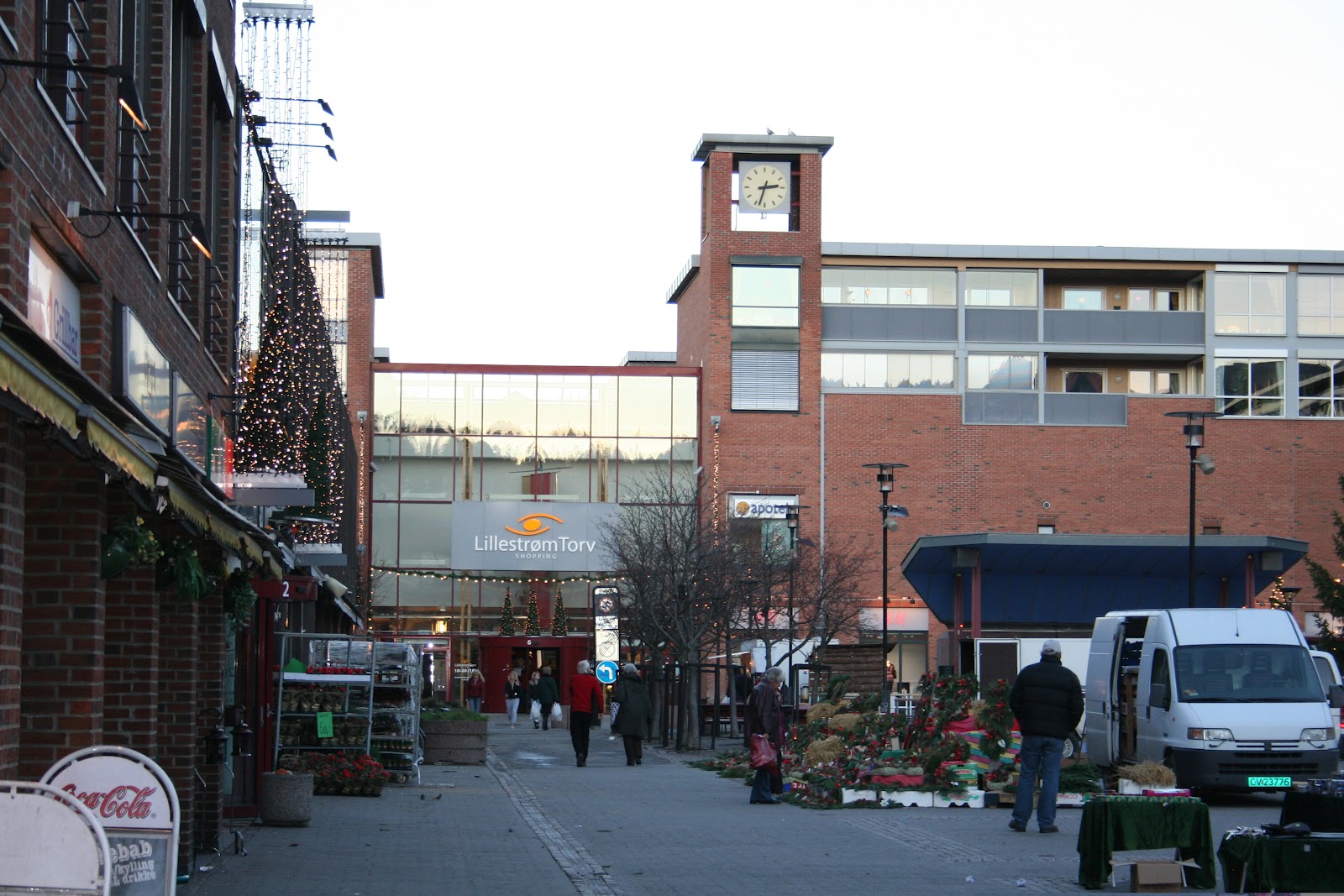
Lillestrøm Town Centre
I was wrong about Gunborg and Olav.  Theirs was not a bingo existence; the Rælingen house was no retirement village.  Perhaps I appreciated that best in the summer, because although I was staying in the Westland by then I continued to visit whenever I had the chance to reach Oslo again.  To my astonishment, that summer Olav sprang about the lawn in his sports outfit.  He leapt and stretched as we played the badminton he’d proposed.  It was tiring.

They were members of a swimming club so we’d swum; they liked to walk so we went to see the wild birds in the river flats a little to the south of Lillestrøm town.  They were members of a pensioner’s ski club and one day we all went cross country skiing.  I was part of a team with an octogenarian leader and all other participants over seventy.  There must’ve been at least some arthritis for them to contend with, but the pace was altogether suitable for an Australian skiing novice.  Maybe it was really me who was seventy.

Meanwhile the oak tree had been busily changing its dress, not into a sports outfit but donning a light green hairdo for spring, a mature deep green summer crown and a short-lived autumn cloak of yellow and brown.  It wasn’t only Gunborg and Olav I came to visit in every season, but the equally active oak tree.

But I get ahead of myself.  In the initial days Gunborg and Olav, ironically, spent some amount of energy concerned that I was bored, despite my saying I wasn’t.  They proposed the museum trips and the National Theatre for a play.   They organised for me to spend one weekend with their eldest son Torgrim and his family; but unfortunately, because of the language difficulties, I hadn’t understood that plan.  Just as we were leaving there was a sudden fussing because I hadn’t packed any clothes.  I had no idea I needed to.

When it became apparent I wasn’t going back with them on the same day, I was quite upset about it, though I said nothing.  I thought I must’ve done something wrong.  I was sure they were bored with me.  And I don’t know what their son thought because I was sullen and consumed in thoughts about what bad and probably Australian thing I might’ve unthinkingly done.  It was only when we went down to their tennis court on the next day that it properly dawned on me, that they thought I would enjoy the change.  Their son’s wife Frøydis asked, ‘Didn’t you bring your tennis shoes?  Didn’t they tell you we’d be playing tennis?’  So I played tennis, embarrassed, in bare feet.

Eventually I challenged the Nitelv.  With courage built I followed footprints through the snow covering the ice of the river, thinking I could turn back if the tracks suddenly stopped by a hole; yet without incident I reached the far side.  My Australian parents would’ve been more than a little concerned; but Gunborg had watched calmly from her kitchen window.  She knew the exact temperature from the thermometer affixed outside the glass pane and from past days she knew the ice was thick.

Walking on ice was a skill to learn, not only on the Nitelv but on the footpaths too; and it came in handy, later, in Hatiya, when fearlessly negotiating the muddy back roads of the monsoon.  There’s something similar about the stepping lightly and placing your body weight with care.

There was one morning they managed to tell me to be sure to take warm clothes as it was six degrees.  I thought I must’ve misunderstood.  Six degrees was hardly that cold: a winter’s night in Sydney might be as low.  I asked several times and surely they were saying ‘six’.  Pleased, I thought I might escape the full horse of clothes and sneak away to class in just a jumper; but I didn’t make it three steps.  In winter Norwegians don’t always vocalise the minus in the temperatures, I learnt. 

Of all meals in Rælingen breakfast was my favourite.  We ate slices of brown bread with paté and gherkins, herring in tomato sauce, Gunborg’s homemade apple jam, cold meats and cheeses: there was Jarlsberg with the holes, ‘key’ cheese with the little crunchy brown pieces in it, goat’s cheese and the soft caramel tasting brown cheese for which Norway is famous.  We’d swallow a teaspoon of cod liver oil washed down with milk, orange juice or filter coffee. 

The evenings shared were often given to pointing at things, with me repeating the Norwegian name; not unlike what would later occur in the tea shops of Hatiya as the villagers taught Bangla.  Sometimes we used dictionaries and Gunborg made sure there was a pad by the kitchen table to supplement with doodles the communication struggle.  I practiced the basic phrases from class and learnt new vocabulary.  They also asked things: Olav once enquired if when one had had enough to eat it was possible to say, ‘no thanks, I’m fed up.’  It was the dictionary that divulged why Gunborg’s food was as it was: she’d spent her working life as a home economics teacher.

And it was truly remarkable to have these new, varied and detailed Norwegian memories.  I’d even seen Ingrid from their optometrist business, a tradition their younger sons had continued, appear on a love match TV game show and I hoped she’d find someone nice.  It was strange that I cared about anything so specific occurring at the far end of the world.

I used to wonder about the simplest differences: the thoughts behind the habits and the décor of Rælingen.  Why was the Norwegian concept of how a room should be altogether different?  How had light taken its Norwegian meaning?  What of more complex ideas? 

It is the caveman drawings of my thoughts I write of, the zero point.  Thoughts are culture shaped and predictable most of the time; they’re barely ours.  But in Norway there were thoughts in the curtains, in the spreading of butter upon bread and in the lacing up of boots by the door: new thoughts to be had, everywhere.  And those first days in Rælingen were for my thinking as the fabled first primeval steps of prehistoric animals, from the swamp onto the land.

Sometimes I consider that although my body had been born in Sydney eighteen years earlier, my thoughts are creatures of the icicles that crunched underfoot and dangled from the lampposts at old Fornebu Airport, in Oslo, on that first evening when I met Olav. 

As it happened, like the Brahmaputra's, my journey started with ice.


** Photos from later visit in Autumn 2006.


And speaking of the Clauses, there's no forgetting the brave fisherman, the mother bear from Goldilocks or the riders from the north.


This article also published in Star Magazine, here: Zero Point

Norwegian Light: Article Index for articles about Norway

Rodent Tourism

She had a dainty nose, small and pointed; her eyes were chocolate brown and shaped as watermelon seeds.  Through the brown silk of her hair could be seen the pink flesh of her small, rounded ears.  Her body was a little plump, overweight; but she was loved.  As she flitted about, like a bridal party attending to its bride it followed her: that long earthworm of a tail.

I’ve never had any particular affection for rats, but this one was the pet of some friends of a friend, many years past in that town of islands, Kristiansund in Norway.  She had free run of the house, the rat, and they seemed not to mind as she scurried up their arm or circumnavigated their necks.  Rats only live for a year or two, they said; so a life-long friendship for a rat is but several seasons.

People are never alone in this world: naturally enough there are other rat admirers amongst us, people enamoured of rodents.  This article is for them, for should one find oneself desirous of rodent-company whilst on holiday, there are options.

Entrance gate to the Kani Mata Temple, Deshnoke, Rajasthan

Deshnoke is a small town of around 15,000 people about thirty kilometres from Bikaner in Rajasthan.  It’s not a town that’d attract much attention, being not dissimilar to any of the other small towns in the brush country of the Thar Desert, if were not for the Karni Mata Temple.

Born in 1387, Karni Mata was a mystic believed to be a reincarnation of Durga; it is said she performed many miracles.  When her stepson Laxman drowned while attempting to take a drink from a tank, Karni Mata urged the god of death Yama to bring him back to life. 

Yama initially refused, but later allowed all of Karni Mata’s male children to be reincarnated as rats.  Alternatively, the 20,000 mostly brown rats that are fed, protected and worshipped at the temple are said to hold the souls of traditional bards called Charans.  Karni Mata is said to have been 151 years old when she died.


Removing one's shoes at the grand silver gates that mark the entrance, it's quite a novel experience to wander a courtyard populated by rats.  At the altar it's possible to seek Karni Mata's blessing, consuming Prasad, the edible offerings shared by the rodents.

The temple is said to reinforce a simple truth: all life is sacred, even rats. 

It is auspicious to see a white rat.  It is auspicious if a rat runs across your foot.  And as I was once told, when bubonic plague caused many human deaths in the towns of Rajasthan, in Deshnoke not a single person died, thanks to the blessings of Karni Mata and her temple of rats.

View from the Rat Garden Hotel, St. Lucia
Across the world in the Caribbean, and it may not be there now for there were plans for it to close, there is or was a budget hotel set amongst a lovely rat garden.  It’s a beautiful establishment in the lush subtropical hills above Castries, the quaint capital of St. Lucia.  The rooms are clean and spacious, food delightful, particularly as the reception area and dining table doubled as the living room of Cherie and her family, the local hoteliers.

A laid back French St. Lucian, there was no question Cherie had a soft spot for animals.  The multiple dogs and cats wandering about were additional family members, so the rats should have come as no surprise.  It was while sitting on the balcony enjoying breakfast, with the paradise of the St. Lucian Caribbean spread out like a blanket beneath, with views all the way to the horizon, Martinique, that they could be seen scurrying about in the garden immediately below: large, well-fed and clean.  ‘People said I should poison them,’ Cherie said, ‘but I didn’t have the heart to.’  If St. Lucia is paradisiacal for human beings, Cherie’s garden is the equivalent for the rats.

And if the St. Lucian pedigree of rat, significantly larger than the Deshnoke and Norwegian varieties, proves insufficient, then far to the south of St. Lucia can be found the capybaras, the world’s largest rodents.

View from the Rat Garden Hotel to Martinique

The Argentine wetland of Estero del Ibera abounds with wildlife, monkeys, deer, caimans, which are an alligator relative; and for me the star attraction: the capybara.  As large as a small goat and tail-less, even for the rat-non-lover this marsh-dwelling rodent is something special.

Capybara wades
As usual I’d imagined hours of weary search and maybe slight danger in the quest to locate the species; in the hope of the sort of fleeting glance that would more than satisfy the visitor to the Sundarbans in search of tigers.  Safaris should be like that, but it wasn’t.

It’s possible to hire a boat from the small town of Colonia Pellegrini to navigate the short distance across the lake to the Ranger Station, headquarters of the National Park.  The boat comes with a guide, who with some luck could be named Gaston, for Gaston makes his living that way.

After not more than several minutes, stepping off at the wharf by the Ranger Station, the expedition was done.  There on the grassy lawn was a capybara.  The creature didn’t bother to look up as we walked close enough to punch its broad flat nose; it was terribly busy doing nothing, what capybaras do best; an almost-statue but for the odd grind of the teeth.  It ruminated on grass as an elderly mother-in-law in a Bangladeshi village might chew paan or betel leaf.

Capybara chews
That capybara was seriously so unfazed by human presence I thought it might be a fraud: that some ranger had tamed one to impress the tourists, that it’s probably called Antonio and sleeps at the end of the ranger’s bed.  I wanted a real, wild, useless capybara.

Soon back on the water, after checking-in at the Ranger Station, with the silence of an oar Gaston sidled the dinghy to within inches of a caiman, the crocodilian as long as the boat.  It floated as though dead: but its eye moved.

‘Australian crocodiles can run as fast as horses on land over short distances,’ I told Gaston.  Actually I’ve no idea if its true but I think I might have heard that on TV once.  He was suitably impressed.

Continuing through the reeds two things became apparent.  At Estero del Ibera there were seemingly-lifeless caimans all over the place, their hardy scaled bodies and jagged long jaws floating about here and there, the reptiles completely fearless of the boat.  And there were genuine wild capybaras, different sizes but inevitably fat, and completely fearless of the boat.  It was incredible.  Giant rat swims, giant rat chews something, giant rat does nothing much in particular: all could be seen at incredibly close range.

Capybara wallows
Completely satisfied with my capybara encounters, I was in a better position to enjoy the overactive river otters and the bird life, the most impressive bird being the ungainly southern screamer, something of a cross between vulture and turkey that nested in reed clumps and though I didn’t hear it, must be in the habit of screaming now and then, presumably in a southerly direction. 

A swamp deer watched with this, ‘yeah, whatever’ look, as we paddled close.  What was it with these Argentine animals?  None had the least fear; had they not met humans before?

Capybara does nothing much at all
The great thing about Gaston was his genuine interest.  He must have done that tour every day and probably still does, but he really seemed to love those wetlands, his backyard.  I imagined his life with slight envy, how tranquil it would be if the most stressful event in your workday was a caiman closing an eyelid, or maybe that gets to you after a while?

For rodent enthusiasts and those who are not, the Estero del Ibera experience can only impress.  There must be few safaris in the world where contact with wild animals is so easy, where you could just about reach out and touch them; and its surprising really, because while it’s illegal to eat capybaras in Argentina, so I was told, they are hunted for their leather: capybaras sometimes become the belts worn by the gauchos, the Argentine cowboys.

Capybara, king of the rodents


Of course there's more to the Caribbean than rats.  And for more adventure, tracking rodents can't compare with tracking fearsome, wild beasts in Eastern Europe or wondering if the wolves will come...


Free counter and web stats